


By Armaan Makhani
My journey will not sound like the usual origin story of a climate advocate, but that might make it all the more important to share.
It was my first year studying Health Sciences at McMaster University - something I had looked forward to for years. But because of covid-19, instead of lecture halls and new friendships, I was sitting in my childhood bedroom staring at a laptop screen as one Zoom lecture blurred into the next. The pandemic days felt repetitive and distant from anything real.
So when I came across an environmental science elective that required us to actually go outside to collect forestry field data, I signed up without much hesitation. I wasn’t trying to ‘change the world.’ I didn’t have a lifelong passion for protecting the environment. I just wanted an excuse to get outside.
Before that course, climate change was something I cared about in the abstract. I knew it was important, urgent even, but it lived in headlines and documentaries.
That changed the first time I was asked to slow down and observe the world around me - to measure trees, collect soil samples, and notice patterns I had never paid attention to before. It made everything feel closer.
But with that closeness came something I wasn’t expecting: anxiety. The more I learned, the heavier it felt. Climate change stopped being a distant issue and started feeling like something already shaping the future - our future. I remember thinking: How are we supposed to fix something this big?
As I continued taking sustainability courses, working toward my minors in sustainability and community engagement, that feeling didn’t go away. If anything, it grew stronger. When I later became a Sustainability Teaching Assistant, I started hearing the same thing from others. Students would enter tutorials carrying not just curiosity, but fear, frustration, and a sense of helplessness.
It soon became clear that this wasn’t just my experience - it was shared. In fact, three out of every four Canadians feel that climate change impacts their mental health.
For a long time, I didn’t know what to do with that feeling. There wasn’t a single moment where everything clicked - no dramatic turning point. Instead, it was a gradual shift shaped by people, conversations, and small actions that started to add up.
I began to see that my interest in health and my growing passion for sustainability weren’t two separate paths - they were intertwined. This realisation changed the questions I was asking. Instead of wondering whether my actions could make a difference, I started wondering where I could contribute.
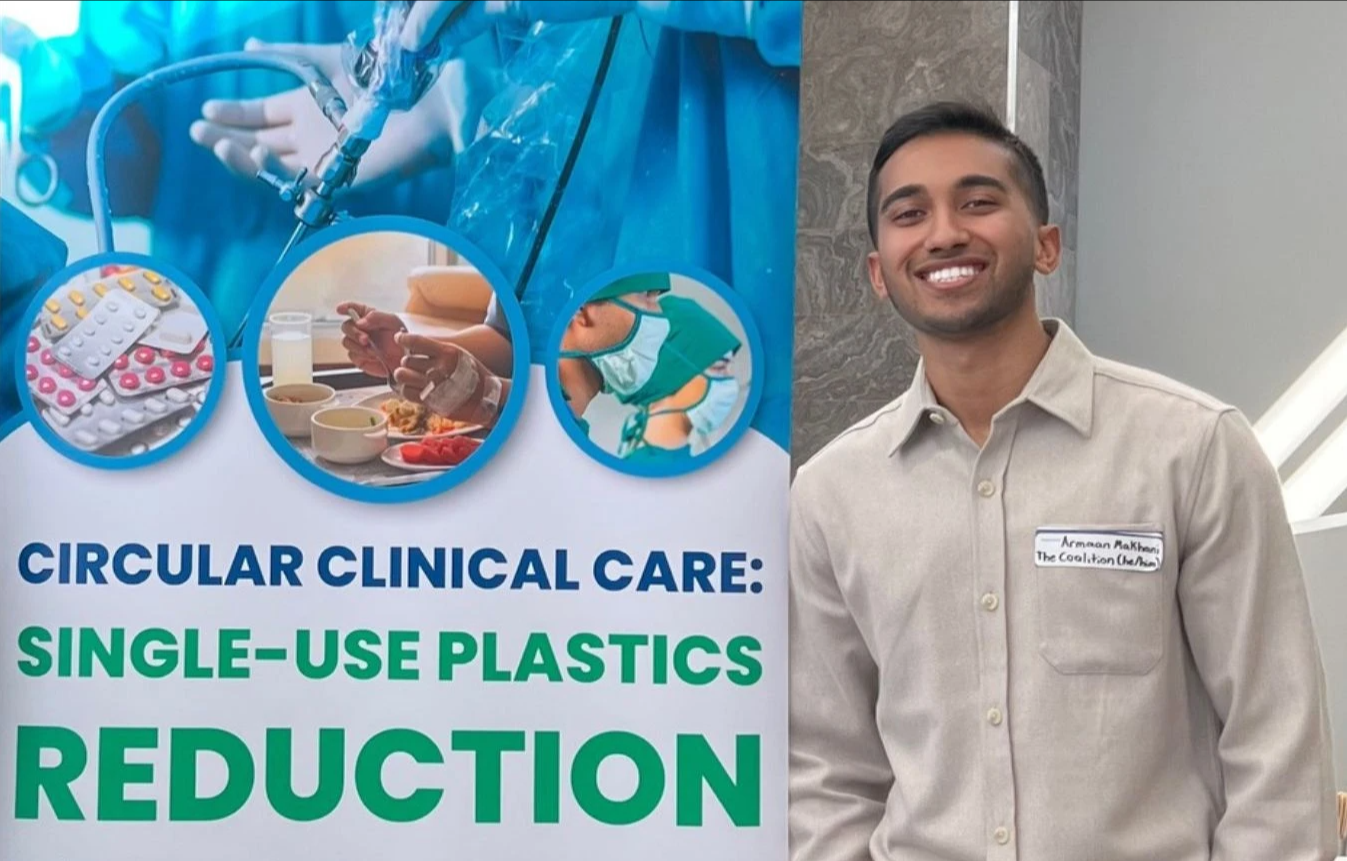
I got involved in research on single-use plastics that informed campus policy, helped lead the Student Sustainability Ambassadors Program to create spaces to transform climate anxiety into action, and started a fund supporting marginalised students with sustainability initiatives.
Over time, something shifted. The climate anxiety didn’t quite disappear, but it started to change. It became fuel and motivation to do more.
The deeper I got into this work, the more I realised that climate change isn’t just an environmental issue - it’s a health issue, and more than that, it’s an equity issue. The communities most affected by climate change are often those already facing systemic inequities, with the fewest resources to respond to disproportionate heatwaves, poor air quality, and limited access to care.
Health doesn’t exist in isolation. It’s shaped by the environments we live in - the air we breathe, the water we drink, and the systems we rely on. There’s an inspiring quote first published by The Lancet, that I often turn to:
“Climate change is the greatest global health threat facing the world in the 21st century, but it is also the greatest opportunity to redefine the social and environmental determinants of health.”
Today, I’m proud to work on a national, interdisciplinary project team at the Canadian Coalition for Green Health Care, supporting efforts to transition Canada’s health system toward net-zero. My work involves developing educational resources, exploring low-carbon technologies, and leading conversations on how we can reduce emissions in healthcare buildings while strengthening resilience. It’s technical at times, but it’s still about people.
It’s about recognising that the buildings we design, the energy systems we use, and the decisions we make in healthcare all have real consequences for human wellbeing. So we must keep asking: how can we do better?
What has surprised me most is how powerful it is when people are given space to engage with this work in a meaningful way. I’ve seen students enter class overwhelmed and leave with a sense of purpose, small ideas grow into institutional change, and momentum shift when people realise they’re not alone.
Hope, I’ve learned, is not something to wait for. It’s something to build - together as a society. I don’t become hopeful by ignoring how uncertain and serious things are. I become hopeful by staying connected - to my faith, to community, to the natural world, and to the stories of people who show up, in big and small ways, to create change.
I remind myself that my own journey didn’t start with a grand plan. It started with a single, almost accidental decision. Which makes me think: how many others are out there right now, one opportunity away from finding their way into this work?
Throughout this journey, I’ve worked to weave together health, equity, and climate action - threads too often kept apart. I’ve also tried to help young people step into their own power as leaders rather than bystanders by transforming climate anxiety into agency.
The recent increase in environmental sustainability dialogue within our Jamat, alongside the honour to be named one of Canada’s Top 30 Under 30 Sustainability Leaders, has further ignited my drive to support Ismaili youth as they transform into trailblazers within this space. And if there’s one thing I’ve learned, it’s that we can’t leave this kind of transformation up to chance!
This piece was originally published on the.ismaili on April 7 2026.