By Zubair Shahab
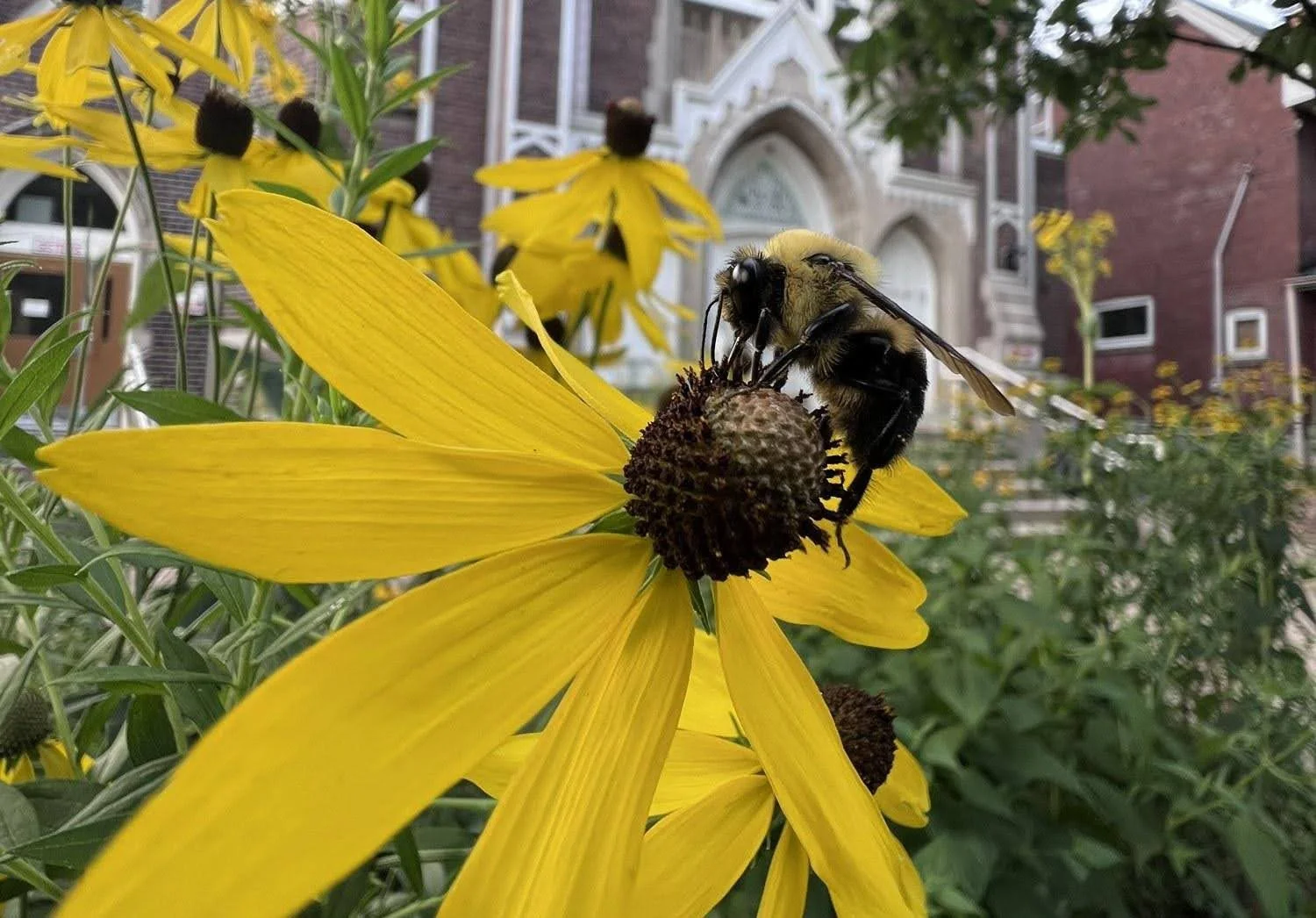
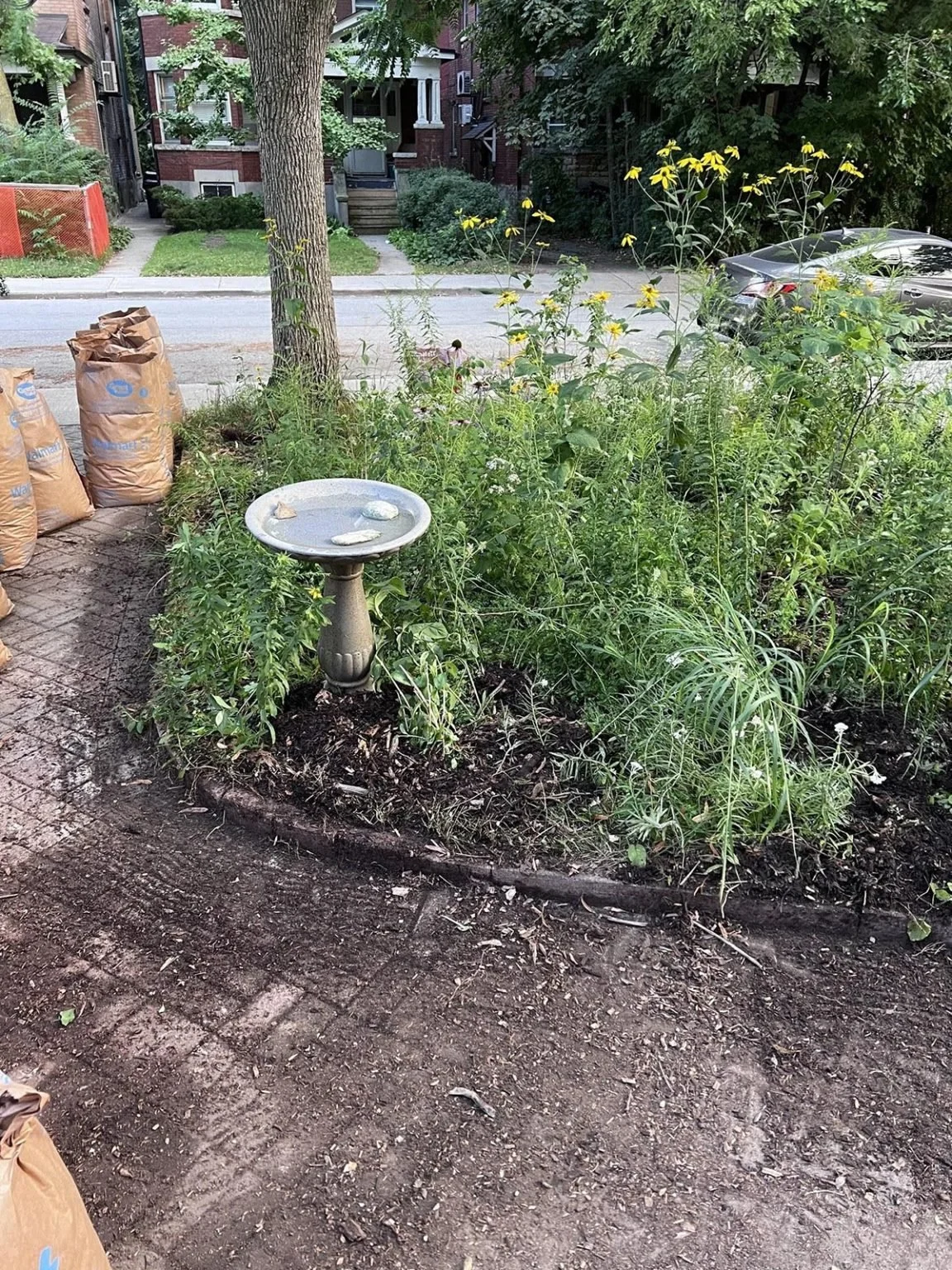
Last year we planted the Peace Garden at Jami Mosque: a pollinator bed along the boulevard out front, on a strip of ground that had not been doing much for anyone.
A year on, it is working. The bed fills in earlier each season, the birdbath is the busiest spot on the property, and on a warm afternoon you can stand on the sidewalk and count bumblebees without moving. That is the thing about a pollinator garden — you plant it once and the results arrive on their own schedule, usually a season later than you were hoping.
Why we added vegetables
This year we wanted to build on that, and the reason came from somewhere else on the property.
We had recently started a Community Fridge at Jami — an open food bank anyone can take from. Running it taught us fast how much need there is in this neighbourhood, and how quickly the shelves empty. Fresh produce is the hardest thing to keep stocked and the first thing to go.
So we put in a vegetable garden.
We were honest with ourselves about scale. A few beds against the side of a mosque are not going to solve food insecurity in west Toronto. But two things made it worth doing. The first is that it does contribute something real to the fridge. The second, and the bigger one, is that it shows people this is something they can do themselves. Most of the people who walked past our beds this summer have never grown food and assume it takes land, money, or expertise they do not have. It takes a container, some soil, and someone willing to water it.
What we planted
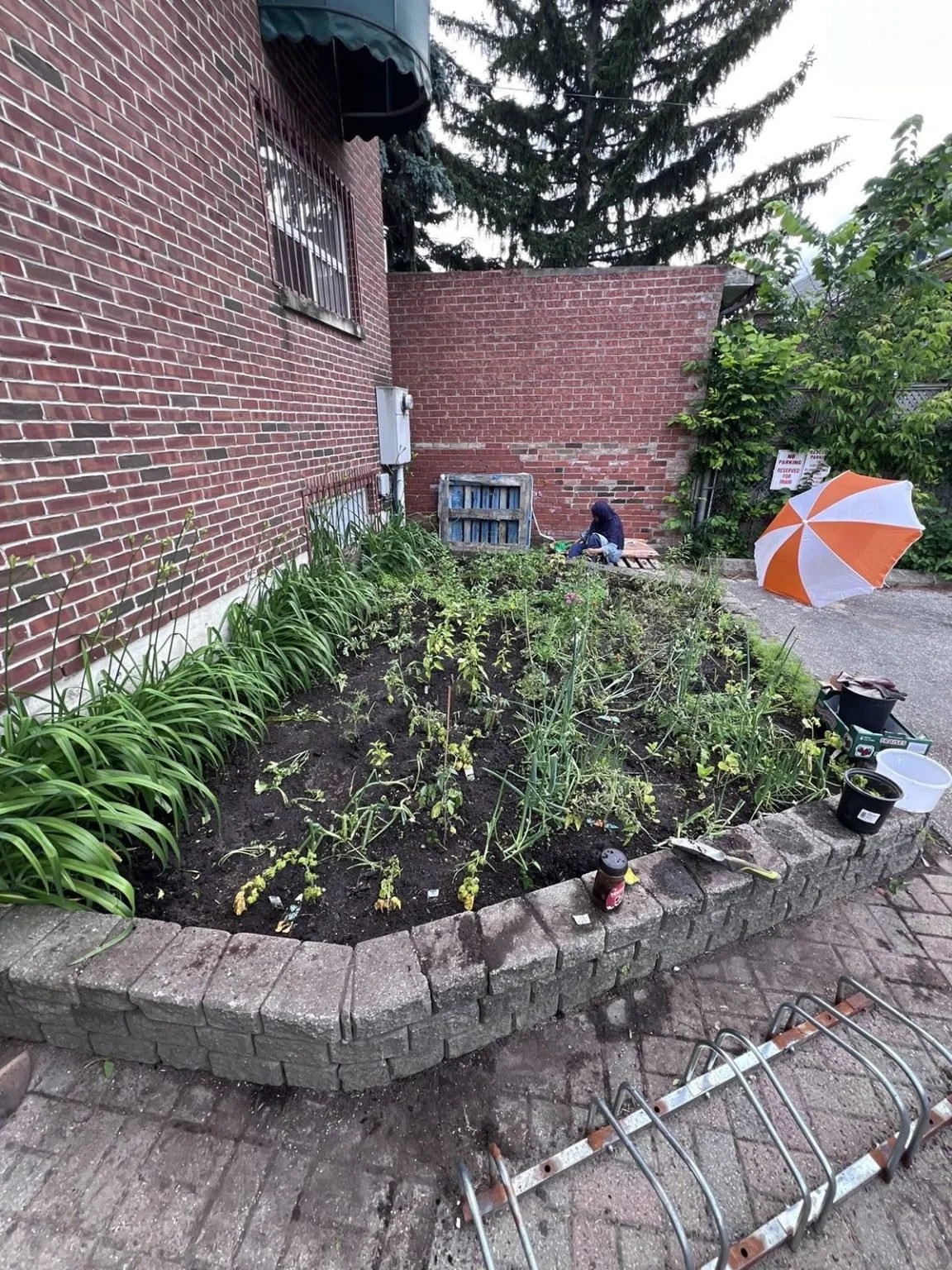
We started in April, when the soil and mulch arrived from Scotts Canada. Beds got turned, containers got filled, and a group of volunteers spent a Sunday putting seedlings in the ground. Half of us had never grown a vegetable before.
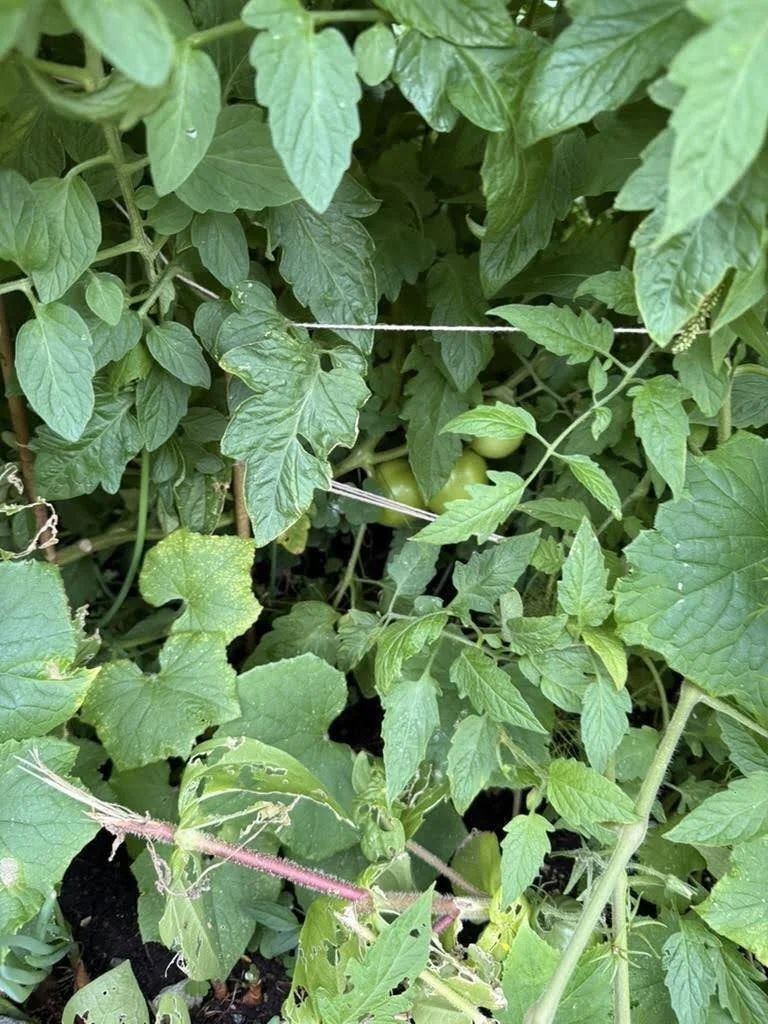
We planted tomatoes, eggplant, onions, cucumbers and greens, and interplanted zinnias through the tomato rows to pull pollinators over from the front garden into the vegetable beds. That worked better than we expected — having the established pollinator bed already on site gave the vegetables a head start we did not have to work for.
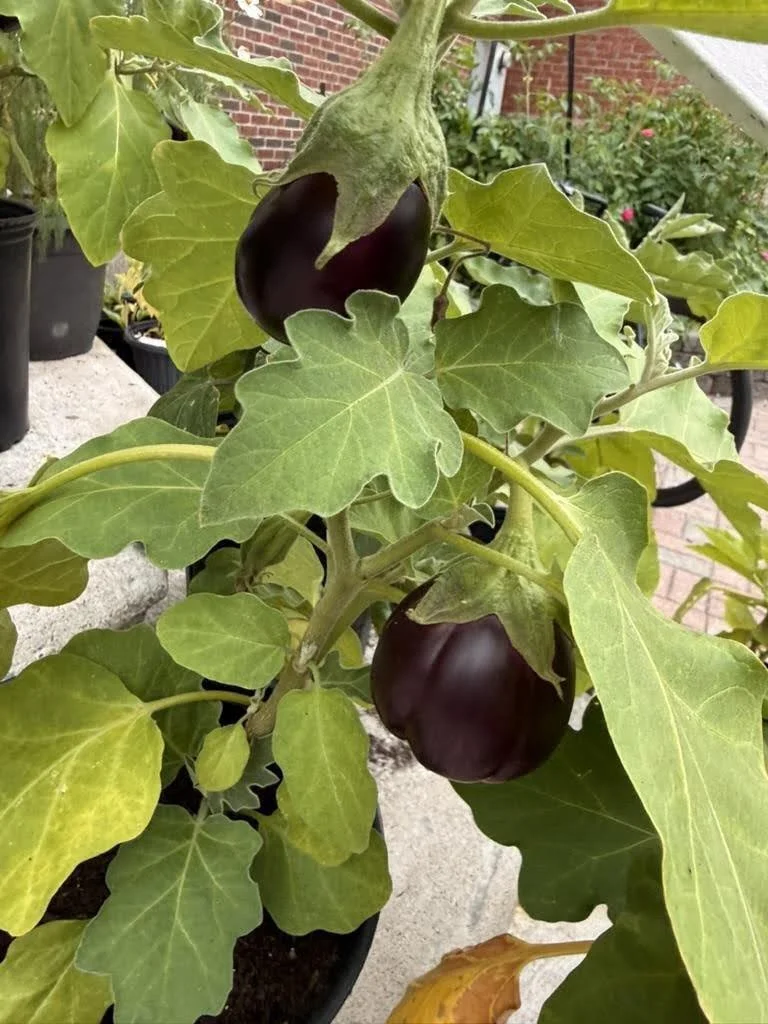
The eggplants were the surprise of the season. Two plants in containers gave us more than we knew what to do with. The tomatoes came in steadily from late July onward.
How it actually got done
A small group of people who kept showing up.
Our garden team meets on Sundays. That is when the bigger jobs happen — planting, moving soil, cutting back, harvesting. But a garden does not wait for Sunday. Through the week, volunteers take on individual tasks: watering in the evenings, weeding, checking the containers during the hot stretches in July. Sadia and Yasmine in particular carried a lot of this, often buying supplies out of their own pockets before we sorted out reimbursement.
Nobody on this team is a professional gardener. What made it work was breaking the season into small, assignable jobs, and having a standing weekly time so it never fell entirely on one person.
Why a mosque grows food
In our tradition, human beings are described as khalifah — caretakers placed on this earth with a responsibility for it, not just a claim on it. Wasting water is discouraged even when you are standing at a flowing river. Wasting food is discouraged outright.
A garden makes those teachings concrete in a way a sermon cannot. A child who helps water tomatoes in June and eats one in August has learned something that will stay with them.
Next season
We want to keep developing the vegetable garden — more beds, a compost bin, and the children’s weekend school classes involved from the first planting day rather than partway through. We would also like to label the pollinator plants properly, so people walking past on Boustead learn the names of what they are looking at.
And we want to keep the Sundays going. That turned out to be the whole trick.
This piece was originally published on Faith and Common Good on September 7th 2026.