Opinion

Islamic Perspective on Biodiversity

Cjvj8egW0AAiTCL.jpg

By Kamran Shezad

In a famous speech delivered in 2010, His Royal Highness, Prince Charles spoke extensively on “Islam and the Environment”. During this excellent overview, he mentioned two important, personal findings. Firstly, he concluded that people were more likely to care for the environment if they were told that this is a religious responsibility. Secondly, he asserted that no religion stresses the importance of green matters more so than Islam. 

It is hard to disagree with him on this, the teachings of Islam are inherently environmental. Biodiversity is celebrated in the Holy Qur’an. Prophet Muhammad (peace be upon him) championed environmental rights and concerns fourteen centuries ago. 

Life on earth is made up of a complex set of interrelated ‘ecosystems’ which should be maintained in a natural balance. For example, if there were no pollinating insects on earth like bees and butterflies, there would not be any fruit. Without plants that provide nectar and pollen, there would be no food to sustain the bees. Bees and plants are dependent upon each other. Many ecosystems rely on a wide variety of plants and animals interacting with one another like bees and plants; this is what we call biodiversity. The Quran mentions this balance beautifully: 

ِمي َزا َنِْق ْس ِط َوَل تُ ْخ ِس ُروا الْالَِو ْز َن بِْقي ُموا الَِن - َوأِمي َزاْْطَغْوا فِي الََل َتِمي َزا َن - أَْوال َس َما َء َرَفَعَها َوَو َض َع ال 

“Allah raised the heaven and established the balance, so that you would not transgress the balance. Give just weight – do not skimp in the balance” (Qur’an 55:7-9). 

Allah requests humanity to respect the balance and acknowledge its importance for our very own existence. He also asks us to maintain this balance - what we take from this earth with one hand, we must return with the other. 

Elsewhere, the Quran is rich of references to the beautiful world He has created for us. It teaches many lessons on the protection of biodiversity; from the story of Prophet Noah (peace be upon him) who was asked by God to protect all the animals before the coming flood (11: 40), to Prophet Solomon (peace be upon him) who took into consideration the plight of ants whilst marching his army (27: 17-18). 

The primary purpose of the Quran is to provide ‘guidance for the pious’ (2: 2). But an observer will undoubtedly notice it is a book on nature too. It pays constant tribute to life on earth, with many chapters named after animals and plants, such as al-Baqarah (Cow), al-An`am (Cattle), al-Nahl (Bees), al-Naml (Ants), al-Ankabut (Spider), al-Adiyat (Horses), al-Fil (Elephant), al-Insan (Man), al-Tin (Fig), and al-Nas (Mankind). It asks us to reflect on how the camel was created and how the sky was raised (88: 17-18). Plants such as onions, figs, mustard, pomegranate, trees, lentils, grapes, fruits, garlics, cucumbers and dates all get a mention in the Quran - as a sign of Allah’s perfection and a reminder of the variety and variability of life on earth. 

Our lives depend on healthy waters, the oceans and rivers are essential for the survival of life; they are the lifeline of this planet and civilisation. Oceans cover over two thirds of our planet and hold 97% of the planet's water. They produce more than half of the oxygen in the atmosphere and absorb the most carbon from it. Rivers are equally as important, they also provide us with food as well as energy, recreation,

transportation routes, and of course, water for irrigation and for drinking purposes. Most settlements and major cities around the world are built along major rivers. Muslims are aware of all of this thanks to the Qur’an, which in many places refers to the role of the oceans: 

َك َمَوا ِخ َر ِفي ِه َولَِتْبَت ُغواْلفَُْب ُسوَن َها َوَت َرى الَْتلَية ُْه ِحلُجوا ِمنِْا َوَت ْسَت ْخر ي َِطرْح ماُه لَُوا ِمنُْكلَْب ْح َر لَِتأِْذي َس َخ َر الََو ُهَو ال َ ُكْم َت ْش ُك ُرو َنَعلِمن َف ْضلِ ِه َولَ 

“And Allah committed the sea to serve you; you eat from it tender meat and extract jewellery which you wear. And you see the ships roaming it for your commercial benefits, as you seek His bounties, that you may be appreciative” (Qur’an 16:14). 

Prophet Muhammad (peace be upon him) was a huge advocate of protecting nature and biodiversity. At a time when there appeared to be no environmental rights or law, he declared a thirty-kilometre area around the city of al-Madina to be a protected sanctuary, and prohibited the cutting down of trees within its borders, as well as giving various protection to other aspects of nature (Hima/Harim). This example is now being used by environmentalist around the world to protect the region’s threatened woodlands, grasslands, wetlands and rangelands. 

In his sayings and actions, Prophet Muhammad (peace be upon him) was green. He equated environmental acts as a form of worship (ibada): 

“If a Muslim plants a tree or sows a seed, and then a bird, human or animal eats from it, then it is regarded a charitable gift (a means of reward, sadaqa) for him” (Sahih al-Bukhari). 

"Verily, there is heavenly reward for every act of kindness done to a living animal.” (Sahih al-Bukhari). 

For his beloved followers, Prophet Muhammad (peace be upon him) is a paragon of mercy. This mercy was not limited to humans, it certainly extended to the plant and animal kingdom. Reports mention that whenever he (peace be upon him) and his devotees would dismount at a station for a rest (during their travels), they would remove all baggage and seating from their camel before performing prayers, eating and drinking. He warned Muslims: 

"Fear God in your treatment of animals" (Abu Dawud). 

"If someone kills a sparrow for sport, the sparrow will cry out on the Day of Judgement, "O Lord! That person killed me in vain! He did not kill me for any useful purpose." (Sunan al-Nasa’i) 

I also want highlight a section from the Islamic Declaration on Global Climate Change drafted by Dr Fazlun  Khalid of the Islamic Foundation for Environmental and Ecological Sciences (IFEES/EcoIslam): 

“We recognize that we are but a minuscule part of the divine order, yet within that order we are  exceptionally powerful beings, and have the responsibility to establish good and avert evil in every way we  can. We also recognize that – 

∙ We are but one of the multitude of living beings with whom we share the earth; ∙ We have no right to abuse the creation or impair it; 

∙ Intelligence and conscience should lead us, as our faith commands, to treat all things with care and  awe (taqwā) of their Creator, compassion (rahmah) and utmost good (ihsān)

One of my favourite ayahs in the Quran is from Surah Al An’am (the Cattle): 

ْمِلَ ى َرِّبهَِم إُِكَتا ِب ِمن َش ْي ء َ ثُْ ُكم َ َما َف َر ْطَنا ِفي الالَْمثََم م أَُل أَِجَنا َحْي ِه إِ ر َي ِطي ُر بْر ِض َوَل َطاِئْْلََو َما ِمن َداَب ة فِي ا ُي ْح َش ُرو َن 

“And there is no creature on [or within] the earth or bird that flies with its wings except [that they are] communities like you. We have not neglected in the Register a thing. Then unto their Lord they will be gathered.” (Qur’an 6:38) 

Allah is referring to biodiversity as ‘communities’. What is a community, the definition of a community in the dictionary states: 

∙ a group living in the same place or having a particular characteristic in common ∙ a group living together and practicing common ownership 

Reflect for a second on what Allah swt is saying to us here, biodiversity is not for us to use and abuse, it’s not for us to have dominion over, it’s not for us to control or consume but for us to treat as a community, Every single variety of plant and animal life on this planet has a role to play just as different people have roles to play in communities. We are interconnected and there is no getting away from that. 

To conclude, Allah has created this magnificent world for us. Whilst we must enjoy the blessings that this earth provides us, we must also show responsibility in our actions. This responsibility is manifested through consumption - that we only use what is necessary. It is also reflected in maintaining the balance - that we constantly replenish what we have taken. 

You can read more about different faith perspectives on biodiversity by visiting the UN Environment Programme webpage set up by the Faith for Earth initiative. 

Faith Inspired Activism & Environmental Justice - An Islamic Perspective

By Kamran Shezad

The Prophet Muhammad صلى الله عليه وسلم said:

“If the Hour (the day of Resurrection) is about to be established and one of you was holding a seedling, let him take advantage of even one second before the Hour is established to plant it.” (Al-Adab Al-Mufrad)

As Muslims, we never give up on life. Even if we’re told there’s no hope, we continue to provide people with the best of care to help their health improve. We should behave no differently towards our planet, our Creator has given us this Amanah (trust) and we must continue to show care, compassion and fight her justice. This beautiful opening quote from our Prophet صلى الله عليه وسلم above contains a clear instruction that regardless of what we may think is about to happen, we must continue to play our role and fulfil our duties. This narration can be used in various contexts but is very pertinent to today’s climate change challenges. Activism and campaigning for climate justice should be seen as an act of Ibaadah (worship).

Allah Almighty says:

“Corruption has appeared throughout the land and sea by [reason of] what the hands of people have earned so He may let them taste part of [the consequence of] what they have done that perhaps they will return [to righteousness].” Surah Rum (30:41)

In this verse, Allah Almighty is asking us to ‘reflect’ and is telling us that if we reflect on the consequences we are facing, we have the ability to change things and return to better times. ‘Reflection’ is described as a process that helps turn experience into knowledge and involves thought and exploration of a concept or event. It is a form of problem solving that is used to resolve issues, and involves the careful consideration of a current practice, based on available knowledge and beliefs. The Quran is in effect a coaching manual and it coaches us on how to take action on one of the most important issues humanity is currently facing: climate change.

One of the biggest Sunnahs of our Prophet Muhammad صلى الله عليه وسلم is that of ‘struggle’. Our Prophet is the best of creation, most beloved to Allah Almighty (swt), yet he faced intense hardship and difficulties. Success was not always easy or instant during the lifetime of the Prophet. This is a lesson for us all: to achieve something important we must work hard and fight for what we believe in. Ultimately, Allah Almighty (swt) is the One who can change a situation. Our Prophet صلى الله عليه وسلم would constantly stand up for the rights of the oppressed and would call for justice; he in fact called on all of us to take action:

“When any of you sees an injustice/evil let him change it with his hand. If he is not able to do so, then let him change it with is tongue. And if he is not able to do so then let him hate it with his heart though that is the least of his faith” (Sahih Muslim).

The Prophet Muhammad صلى الله عليه وسلم inherited substantial societal problems such as infanticide, slavery, misogyny, materialism and so much more. However, instead of shying away from his responsibilities, he accepted and worked through them without hesitation. Climate change, although a very recent occurrence, is not just an environmental problem: it is also one of the greatest threats the world has ever faced. Sea levels are rising, oceans are becoming warmer, longer and more intense droughts threaten crops, wildlife and freshwater. Our planet’s already diminishing diversity is at further risk due to the changing climate.

Climate change affects different people and places inconsistently. Therefore this leads to inequalities within and across nations, as well as between current and future generations, and this is climate injustice. Poorer countries although least responsible for the effects of climate change are suffering the most from its devastating effects in particular with food insecurity, water scarcity and loss of biodiversity.

In the above hadith, we are clearly being told that it is incumbent upon Muslims to stand up against all forms of injustice and that includes standing up for establishing climate justice. It is not enough for us to be sad about the devastation being caused across the planet. To please our Lord and Creator, we must convert our feelings of sorrow, anger and guilt into something more meaningful which brings about systemic change.

“Seek Me amongst the downtrodden, verily you are given your substance as well as Divine aid, owing to your treatment of your downtrodden” (Tirmidhi).

The impacts of climate change are primarily affecting many of the world’s poorest people, those who Allah Almighty (swt) and the Prophet صلى الله عليه وسلم love. Prophet Muhammad صلى الله عليه وسلم would have dedicated himself to their service, so as a Muslim community we should also have that love so we can keep this prophetic ethos alive.

"Be a community that calls for what is good, urges what is right and forbids what is wrong. Those who do, are the successful ones" - (Quran 3:104)

As Muslims, we should be exemplars, leading the wider community in addressing various injustices. Failure to do so could be calamitous for the world. Amongst those potential consequences is losing the assistance of Allah Almighty in our affairs and in our sustenance:

"…Allah Almighty does not change the condition of people unless they change what is in themselves". (Quran 13:11)

Advocating for change is not an easy task, it requires courage to engage in campaigning for action, particularly with the issues surrounding climate change. Unfortunately, materialism, capitalism, fake news, apathy and many other factors are major obstacles on this journey. Environmental protection is not high on the agenda within our community, nor is it taken as seriously as it should be in politics. It is far from easy to stand up to the status quo or to go against the policies of the government and authorities.

We can however take inspiration from the story of Prophet Musa (as) as described in Surah Ash- Shu’ara (26:10-15) who learnt to overcome fears and to confront the challenges that needed to be faced. Allah Almighty (swt) commanded Prophet Musa to go to Fir’awn, knowing full well the political power and the heartless strength that lay with Fir’awn. Prophet Musa (as) confessed his concerns to Allah Almighty and made supplication before continuing. Whilst there is no intention here to compare our communities or authorities with that of the ruthless Fir’awn, it is important to highlight the key principle of having belief and confidence in Allah Almighty (swt) in all matters.

In Islam, the root of faith is to believe in Allah Almighty as the only deity worthy of worship and that Muhammad is the Messenger of Allah Almighty. Acknowledging the supremacy of Allah Almighty in both human and environmental affairs is essential for the accomplishment of our activism. Perhaps the secret power of this truth is hidden in the Fatiha prayer we recite at least ten times a day ‘You alone we worship, and in You alone we seek help’ for were we truly live this truth, there would be no doubt, no fear, no discouragement. Committing our actions for the sake of Allah Almighty, knowing everything is in His Hands, we can freely act against injustice without worry or despair as to the likely results, making our affair purely for our Compassionate and Merciful Lord.

"You who believe, uphold justice and bear witness to God, even if it is against yourselves, your parents, or your close relatives. Whether the person is rich or poor, God can best take care of both. Refrain from following your own desire, so that you can act justly- if you distort or neglect justice, God is fully aware of what you do. (Quran 4:135)

What does Islam say about climate change and climate action?

By: Ibrahim Ozdemir

Muslims already have an environmentalist framework to follow. It is set in Islam.Many Muslim majority countries bear the brunt of climate change, but their cultural awareness of it and climate action are often staggeringly limited. 

A movement of “Islamic environmentalism” based on Islamic tradition – rather than imported “white saviour” environmentalism based on first-world political campaigns – can address both. And the post-COVID-19 lull in emissions is an opportunity to fast-track this.

It is a movement we sorely need. My home country Turkey, for example, is particularly vulnerable to the effects of climate change, as temperatures are rising and rainfall is decreasing year on year, causing serious problems with water availability. In Bangladesh, it is estimated that by 2050 one in seven will be displaced by climate change, creating millions of climate refugees. In the Middle East, large areas are likely to become uninhabitable due to heatwaves likely to sweep over the region in the next few decades.

However, despite their vulnerability, many Muslim countries are contributing to the problem. Indonesia, the most populous Muslim-majority country in the world, is the world’s fifth-largest emitter of greenhouse gases, and is doing little to curb emissions. Bangladesh and Pakistan are the two most polluted countries in the world, but have taken no serious measures to address pollution. Inaction in the Muslim world persists despite a declaration by Muslim countries in 2015 to play an active role in combatting climate change.

You would think that those most affected by climate change would be the most eager to stop it. This is not always the case. Many Muslim countries are reluctant to impose Western concepts of environmentalism, or to bow to pressure from countries which have already gone through industrialisation without having to address pollution or curb emissions. Environmental colonialism is not the answer. 

What would work, and has been proven to work, is using the principles of Islam to encourage conservation in Muslims. 

Islam teaches its followers to take care of the earth. Muslims believe that humans should act as guardians, or khalifah, of the planet, and that they will be held accountable by God for their actions. This concept of stewardship is a powerful one, and was used in the Islamic Declaration on Climate Change to propel change in environmental policy in Muslim countries.

In fact, Muslims need to look no further than the Quran for guidance, where there are approximately 200 verses concerning the environment. Muslims are taught that “greater indeed than the creation of man is the creation of the heavens and the earth”. The reality is that nothing could be more Islamic than protecting God’s most precious creation: the earth. 

It is this approach that can reach the hearts and minds of the 1.8 billion Muslims around the world, and it must be integrated with, rather than neglected by, the climate movement.

The Prophet Muhammad (pbuh) also demonstrated kindness, care and general good principles for the treatment of animals, which form a benchmark for Muslims. He outlawed killing animals for sport, told people not to overload their camels and donkeys, commanded that slaughtering an animal for food be done with kindness and consideration for the animal’s feelings and respect for Allah who gave it life, he even allowed his camel to choose the place where he built his first mosque in the city of Medina.

A 2013 study in Indonesia showed that including environmentalist messages in Islamic sermons led to increased public awareness and concern for the environment. In 2014, Indonesia issued a fatwa (or Islamic legal opinion) to require the country’s Muslims to protect endangered species.

There are also organisations dedicated to using religion to pass on the message of conservation, such as the Alliance for Religions and Conservation (ARC). One of its most successful projects used Islamic scholars to convince Tanzanian fishermen that dynamite, dragnet and spear fishing goes against the Quran – and they listened.

This case also tells us that remote, top-down moralising is unlikely to be effective. The fishermen had previously resisted bans from the government, but were persuaded once they were told that they were acting un-Islamically. One fisherman said: “This side of conservation isn’t from the mzungu [“white man” in Swahili], it’s from the Quran.”

Clearly, we need to speak the language of those whose behaviour we are seeking to change, particularly if that language is naturally averse to unsustainable policies.

Some Muslim thought leaders are aware of this and are eager to develop a “homegrown” environmental movement to emerge as thought leaders in their own right. For example, the Dhaka Forum this month ran a panel on post-COVID-19 environmental issues with the majority of speakers coming from the Muslim world.

Muslim countries have a head start in the climate race. They have a framework and a belief system which mandates protection of the earth and its natural resources. As Seyyed Hossein Nasr, a prominent proponent of the religion and environmentalism movement, argues, the desacralisation of the West has resulted in an ideology that humans have dominion over the earth, rather than stewardship of it, which is the Islamic view. Muslims must become guardians of the earth once more, for the sake of their environments and for the sake of God.

Ibrahim Ozdemir is a renowned environmentalist and professor of philosophy at Uskudar University, Turkey. Professor Ibrahim Ozdemir is former Director General at Turkey’s Ministry of Education, the Founding Vice-Chancellor of Hasan Kalyoncu University and presently Professor of Philosophy at Uskudar University.

This piece was originally published on Al-Jazeera on August 12 2020.

Islamic perspectives on environmental conservation

By Ahmed ElGharib

To mark the United Nations’ World Environment Day on June 5, 2020, Ahmed ElGharib, Assistant Researcher at the Qur’anic Botanic Garden (QBG), a member of Qatar Foundation (QF), highlights QBG’s contribution to preserving the environment and conserving natural resources


In 1972, to mark the opening of the United Nations Conference on the Human Environment in Stockholm, the United Nations established World Environment Day. Since then it has developed into a global platform that is celebrated in over 100 countries – including Qatar – and encourages worldwide awareness and action for environmental conservation. It has become one of the main vehicles through which the UN promotes positive actions to safeguard our planet. 


This year’s World Environment Day is hosted by Columbia in collaboration with Germany, under the theme of biodiversity, a crucial topic, considering that one million plant and animal species are currently facing extinction due to deforestation and other harmful actions towards the environment. 


As a major oil and gas producer and a signee of several international environmental treaties, including the Paris Agreement, the State of Qatar has placed massive importance on environmental development, one of the four main pillars of the Qatar National Vision 2030. This has manifested itself in various environmental awareness initiatives, animal protection projects, air quality monitoring programmes, as well as afforestation and agricultural work.


On World Environment Day, it is paramount that we – as individuals – also take a moment and reflect on the majestic ecosystems that we have been blessed us with and think about the ways that we can protect them. 


The Holy Qur’an contains over 500 verses concerned with the environment and sustainability, highlighting our sacred duty of taking care of the planet. Since our actions today will have consequences on future generations, we have a responsibility to make conscious choices and decisions that contribute to the well-being of the planet. 


How does this responsibility translate into our everyday lives? 
Firstly, it involves our actions as individuals regarding, for example, the consumption of food, hygiene practices, water usage, and waste disposal. Secondly, it should have a bearing on our relationships with others, so that we as individuals respect the sanctity of human life and promote the fair and ethical distribution of resources. Finally, we must uphold the sacred principles of environmental preservation and sustainability through our direct actions towards the environment, whether it be in the protection of animals, of plants and their natural habitats, or by safeguarding and recycling resources.


Islam is rich in references about the responsibility of Muslims to serve as custodians of the environment. Many verses in the Holy Qur’an describe the lush gardens, trees, and rivers found in Paradise that await believers in the afterlife. This signifies the importance and value of greenery not only on the planet during our earthly existence, but also in the hereafter. 


In fact, based on a Hadith narrated by Anas bin Malik (RA), the Prophet (PBUH), planting trees is considered an act of charity (sadaqa) through which the planet receives blessings from anyone who benefits from it: “There is none amongst the Muslims who plants a tree or sows seeds, and then a bird, or a person or an animal eats from it, but is regarded as a charitable gift for him.”


This Hadith, and the Prophet’s (PBUH) appreciation for the environment, serve as a compass for QBG’s activities. The QBG garden’s inauguration during Ramadan in 2008 brought to life Qatar Foundation’s commitment to promoting greater public understanding of the plants, botanic terms, and conservation principles mentioned in the Holy Qur’an, Hadith and Sunnah (Sayings & Traditions of the Prophet Muhammad (PBUH). 

7141.jpg

Her Highness Sheikha Moza bint Nasser, Chairperson of Qatar Foundation, marked the opening by planting the garden’s very first tree, the Sidra tree, the symbol of QF. The garden remains the first in the world to exhibit all 60 plant species mentioned in the Holy Qur’an, and in the Hadith and Sunnah. Since 2011, as part of QBG’s Ghars Campaign, the organisation has planted close to 1,900 trees, edging towards its goal of planting 2,022 in the lead up to the FIFA World Cup Qatar 2022. In addition, the campaign is dedicated to promoting sustainable development and raising awareness of the importance of environmental responsibility, thereby contributing to the realisation of the Qatar National Vision 2030.

The QBG garden inspires an appreciation of nature and encourages respect and a sense of responsibility towards the environment. It is home to over 60 botanical species drawn from three geographical regions – desert, Mediterranean, and tropical. QBG’s Botanic Museum displays more than 120 botanical items, such as plant parts, traditional medicinal plants, as well as farming, food, and drinking tools. The garden is also home to a Herbarium and a Seed Bank Unit, where all plant species in the garden, along with their relevant data, are documented.


QBG continuously strives to emphasise Islam’s rich tradition of preserving the environment, and, to this end, regularly organise campaigns, events, fairs, and exhibitions, as well as horticultural and educational programmes for the general public, that encourage gardening, sustainability, and natural resource preservation. Just last month, QBG held a series of Ramadan activities, including webinars on food security and how medicinal plants assist in boosting the immune system, as well as informative Instagram sessions and daily competitions.


QBG is a member of Qatar Foundation. More information on QBG’s upcoming events and activities can be found on its social media channels on Instagram: Quranic_Botanic_Garden; Facebook: Qur’anic Botanic Garden, and on Twitter at @QuranicGarden

The Qur’anic Botanic Garden, a member of Qatar Foundation for Education, Science and Community Development, the first of its kind in the world announced to exhibit all the plant species mentioned in the Holy Qur’an, and those in the Hadith and Sunnah (Sayings & traditions of the Prophet Muhammad PBUH). The Qur’anic Botanic Garden was inaugurated by Her Highness Sheikha Moza bint Nasser, Chairperson of Qatar Foundation, on 17 September 2008. 


To mark the event, she planted the Garden’s very first tree, the Sidra (Ziziphus spina-christi Willd, Sidr), which is also the symbol of the Foundation. The Garden exhibits the botanical terms mentioned in the Holy Qur’an, explaining the significance of their mention in the Holy Qur’an, as well as the scientific explanations of composition, application and usefulness to man. It inspires appreciation of nature by encouraging respect and responsibility for our environment.

This piece was originally published on Gulf Times on June 8 2020.

The Crisis of Planetary Health: Reflections from the World Religions

By Mary Evelyn Tucker & John Grim,

The pandemic that we find ourselves in is an indication of how out of balance we are with our world. From what we eat to how we care for our bodies, the very basic habits of a healthy life are already significantly eroded. People wonder what has happened and why we weren’t prepared. We can say it is because we have created an illusion that we are not part of nature. We act as if we have conquered nature and can live in a fantasy world where food comes from supermarkets and water is in bottles. Nothing could be further from the truth. But the challenge is, how will we reconnect the lines back to planetary belonging and planetary health? Without this there is no insurance for human well-being as much as we talk about health insurance systems. As Thomas Berry said, “We can’t have healthy people on a sick planet.” We need healthy ecosystems as the basis of healthy lives. Where will clean water come from, clear air, vibrant soils, nourishing food, and flourishing oceans? These will not come from a deluge of chemicals and an unraveling of ecosystems on a planetary scale. We need new modes of Earth restoration, not endless technologies of extraction.

How did we arrive at this impasse? How is it that we are brought to our knees in a planetary pause that has enormous impact around the world? No one is exempt. No one is guaranteed safety. This is the great leveler. 

With the levels of uncertainty and panic rising we can hardly envision returning to a “new normal,” much less the endless consumption and indifference to inequities that has characterized life in the “developed world.” Will we wake up? Will we connect the dots between the coronavirus and related epidemics to the eating or treatment of animals? More than half of contemporary diseases (SARS, MERS, Ebola, Lyme disease, West Nile virus, etc.) have been connected to our relations with animals. Will we connect the dots to the devastation of the climate emergency that lurks in the background of this pandemic moment? Endless suffering, millions of refugees, droughts and floods, tumultuous weather and devastating storms. 

Where are the portals for change? Where are the values that may guide us forward? 

We are a people devoid of an ethics comprehensive enough and inclusive enough to encompass people and the planet in ways that are convincing and efficacious. The Earth Charter is one important declaration of an ethics of interdependence that can serve as an inspiring vision for integrating ecology, justice, and peace. 

As we transition to a more comprehensive and inclusive ethics, we can also call on the world’s religions for guidance in ways that bring them out of their human-centered concerns to reawaken to mutually enhancing human-Earth relations. Such relations are implicit in all the world’s religions. In collaboration with thousands of people and communities from around the world, the Yale Forum on Religion and Ecology has endeavored to retrieve, re-evaluate, and reconstruct these relationships for the last 25 years. While the religions have their problems in terms of intolerance and other worldly concerns, they also have great promise for being a moral force for our collective planetary health.

faith hope love.jpg

As we survey the world religions, we can see the deep kinship in indigenous traditions, ecojustice in the western religions, duty (dharma) and devotion (bhakti) in the South Asian traditions, and humaneness (jen) and commonality in the East Asian traditions. 

Indigenous traditions around the world have upheld for millennia and still embrace cosmovisions of relationality of humans with the more-than-human world. The mutuality of dwelling within a world of living beings—birds, fish, reptiles, mammals—is honored among native peoples. How could others have lost this worldview of flourishing within a larger family of “all my relations”? How can that be recovered and re-lived in our modern world with respect and humility?

Western religions have always had a strong sense of social justice for humans, but the pull toward ecojustice is now palpable, although still to be fully realized. Judaism, Christianity, and Islam uphold the dignity of the human and are reaching now to include the larger creation—embracing land and creatures. To move toward stewardship in Judaism and Christianity and trusteeship in Islam means that the response to the beauty and complexity of life requires a sense of responsibility for its continuity. This is our greatest hope. Planetary health requires such a moral force along with science, policy, law, and economics.

The religions of South Asia have traditionally had a strong sense of doing one’s duty (dharma) and expressing devotion (bhakti) to one’s guru or god. These religious practices are being extended beyond the human to include duty for the protection and care of nature as well as devotion to the sacred rivers and trees. How can the Ganges and Yamuna, among the most sacred rivers in the world, have succumbed to massive pollution and eutrophication? The call for a renewal of the rivers and a cleanup of ecosystems is gaining traction in India and within aid organizations such as the World Bank. Trees, too, are valued. In the Chipko movement in the Himalayas, women embrace trees to prevent them from being cut down. In Thailand and Cambodia, Buddhist monks are ordaining trees to stop deforestation. 

In East Asia, both Confucianism and Daoism espouse a desire to harmonize with nature, to sense its endless variety and fecundity, and to bring humans into the rhythms of its dynamic flow, the Dao. Confucianism originally envisioned humans not as isolated individuals but as interdependent beings embedded within concentric circles of family, society, education, politics, nature, and the cosmos itself. Moral cultivation of the human aims not just at personal enlightenment or salvation, but at creating humane societies and political systems. Humaneness (jen) is the highest virtue leading to care for others and nature within a commitment to a common good. Humans are encouraged to work for a shared goal, an aim beyond the benefit of an individual. In a Confucian worldview that pervaded traditional China, all education and political offices were aimed at serving the larger public good with moral integrity and civic responsibility. These traditional values are being brought forward into an aspiration to create “ecological civilization” in China. 

All of these religious and spiritual traditions have something to say in our moment with its empty dogmas of hyper-individualism and monetary gain as the highest goods. None of the world’s religions would advocate this approach of personal profit at any cost, and yet this is a dominant ideology at high levels of politics and business around the world. 

The pandemic is calling for a radical change in these values. Can we awaken to our profound relationality with all life? We are in this together, and no one will survive by retreating into one’s own private gains versus a common good. We are a planetary people who flourish beyond the walls of nation states. A pandemic knows no borders. We need to join the Earth community if we are to survive and thrive. Is this not what our children are asking of us? And their children too? Is this not the urgent call of life’s continuity that speaks to us out of the deluge of sickness and death that surrounds us?

Surely we can answer this call and affirm the highest commitment of humans—to pave the way for a life of flourishing in future generations of all species. We might consider a new golden rule for all religions to articulate in their distinctive ways: To nurture the Earth in ways it has nurtured us. Let us embrace this with radical hope and joyful thanksgiving.

Mary Evelyn Tucker and John Grim teach at Yale School of Forestry and Environmental Studies and Yale Divinity School. They direct the Forum on Religion and Ecology at Yale, which arose from ten conferences they organized at Harvard’s Center for the Study of World Religions. They are series editors of the Harvard volumes from the conferences on Religion and Ecology. Tucker specializes in East Asian religions, especially Confucianism. Grim specializes in indigenous traditions, especially Native American religions.

This piece was originally published on The Berkley Center for Religion, Peace and World Affairs on April 17 2020.

Let’s seize this opportunity to ‘flatten the curve’ of air pollution

While major news outlets track the number of illnesses — and deaths — caused by COVID-19, I have been looking for articles that report data on the concentration of pollutants used as indicators for air quality.

And in conversations with friends and colleagues I'm hearing comments about being able to breathe clean air and how being forced to slow our pace of life is Mother Nature's way of saying "That's it. Enough is enough. You're all grounded."

The daily rhythms of millions of people have been drastically changed as governments around the world have declared states of emergencies and lockdowns so that people go home and stay home. Granted, these measures are necessary and will be life-saving as they are based on advice from public health doctors and scientists. These measures will work for as long as people comply.

But will this heightened sense of awareness for our health continue once the coronavirus pandemic is under control, or will we go right back to polluting the air we breathe with nitrogen dioxide, ozone and fine particulate matter?

Surely, less cars on the street, less activity in factories and, in general, less carbon-intensive human activity have been reflected in the numbers of these pollutants since the COVID-19 lockdowns. Pollutant maps from NASA, the European Space Agency, and air quality monitoring stations showed drastic reduction in nitrogen dioxide levels over ChinaItalyParis, and San Francisco. Hence, when my colleague referred to breathing 'clean' air, he was talking about less pollutants and less particulate matter.

If the lockdowns happened during the hot and humid summer months, we would see a decrease — possibly an elimination — of smog episodes that also send vulnerable people to hospitals because they chose not to stay indoors to inhale filtered air.

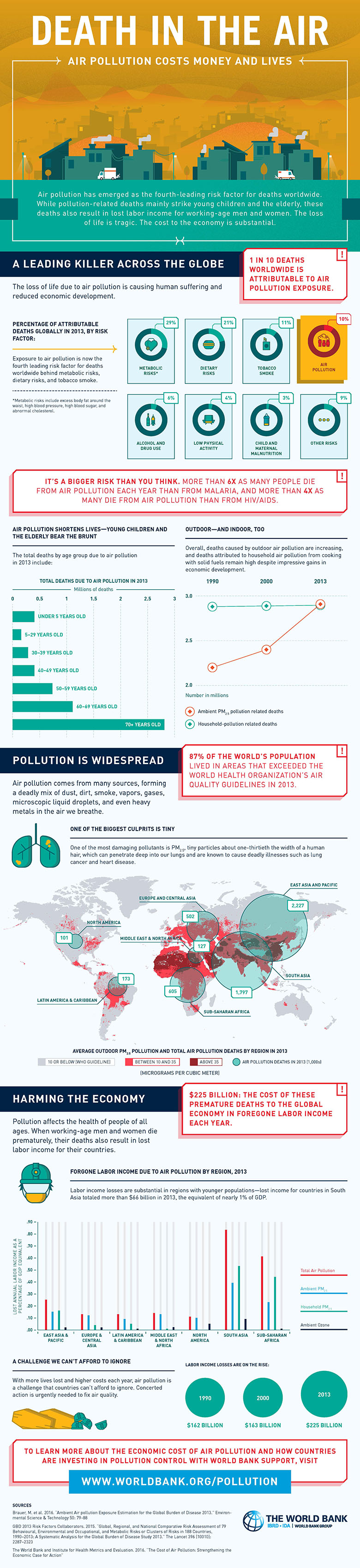
According to the World Health Organization (WHO) and the Global Alliance on Health and Pollution, outdoor and indoor air pollution is the cause of over one third of deaths from stroke, lung cancer, and chronic respiratory disease, and one quarter of the deaths from ischemic heart disease. It is also responsible for the premature deaths of millions around the world and reduction in life expectancy. The largest susceptible groups are the young and elderly and those with chronic asthma and compromised immune system.

In general, human suffering and loss are devastating for any reason. Yet, it makes you wonder how humans in the 21st century rationalize their responses and action in the face of a pandemic such as COVID-19 compared to air pollution, which will get worse with climate change.

Is air pollution recognized as a public health issue in different countries? Yes.

Are statistics collected and published in reputable medical journals? Yes.

Does the WHO and the World Bank recognize air pollution as a 'invisible killer'? Yes.

Does the WHO call upon countries to take action to improve air quality for the health of their citizens? Yes.

Now that we know the causes of air pollution and that it will get worse with business-as-usual lifestyles that caused climate change, do we have the expertise and tools that will help us 'flatten the curve' of air pollutants and even squash it? Yes.

Once we pass the COVID-19 pandemic, which would have given us the best 'clean' air possible in metropolitan centres around the world, let's consciously and seriously decide to keep air quality and the health of the climate front and centre in our lives and political discussions.

Through a SMART action plan with specific, measurable, attainable, relevant and timely goals, we can improve the 'health of the economy' and the clean energy sector without compromising the quality of the air we breathe.

All is required is to make personal choices, vertical and horizonal co-operation and collaboration at all levels and maintaining the sense of interconnectedness locally and across borders that we acutely feel during these tough times.

Hind Al-Abadleh is a professor of chemistry at Wilfrid Laurier University and the 2019 Fulbright Canada Research Chair in Atmospheric Chemistry, Air Quality and Climate Change at the University of California Irvine. She can be reached via email at halabadleh@wlu.ca .

It's Time for Muslims to Join the Climate Movement

By REYHANA PATEL

Climate change. These are two words I’ve heard a million times over in the last few years. I’ve heard it in the news, from our politicians as they campaign for the upcoming election and in my work with a humanitarian agency. But it’s only over the last year or so I’ve started to realize the real gravity of the consequences of human impact on our environment.

As a Muslim woman, climate change hasn’t been high up on my agenda. Within my community, it’s rarely discussed as conversations about Islamophobia, gender and other important issues continue to dominate the voices of our community. While this is slowly changing, our neglect so far surprises me, because Islam places a huge emphasis on the protection of our environment.

In fact, the Quran tells us that as Muslims we are trustees of the world we live in and it is our duty to protect it. Not only is sustainable living encouraged in the Islamic tradition, but we are also taught to never hesitate to positively contribute to our world. The example given is a powerful one: if I happen to find myself caught in the cataclysmic end of the world, and I happen to have a sapling in my hands, I should plant it.

Today, I will be joining Canadians of all walks of life to remind ourselves that our collective lollygagging around the climate crisis may soon bring us to a point of no return.

By joining the Global Climate Strike, I’m adding my voice as a Muslim woman to an urgent call for serious action on climate change at every level, from the individual to international organizations.

Even those of us who live relatively privileged and comfortable lives in Canada are starting to directly feel the effects of climate change. Wildfires, harsh winters and unpredictable weather are all just a minute consequence of us not looking after our environment.

But as part of a humanitarian organization that works in over 30 countries around the world, I am also keenly aware that for the underprivileged in many parts of the world, climate change is already devastating. Earthquakes, droughts, famine, hurricanes are more frequent and harsher to communities already living in the worst conditions we can think of.

Last week, a record-tying six tropical storms were forming at the same time around the world. On Tuesday, the sky in parts of Indonesia turned blood-red in the middle of the day due to 800,000 acres of forest on fire nearby – an area more than five times the size of Toronto.

While we may not always agree on the best ways to proceed in taking care of our planet, we can no longer afford to ignore or downplay the climate crisis.

As a Muslim who works closely with many diverse people within Canada’s Muslim community, I can say that regrettably, we as a community have not always advocated as strongly as we ought to for serious action on climate change, including living more sustainably ourselves.

I am part of this problem. I’m still struggling with eliminating single-use plastic from my everyday life and recycling when I should do this, amongst many other little everyday things I can do to play my part.

We can do more. Canada can do more. I believe that there are many traditions, religious and otherwise, that encourage this vision. And that is why I am joining people of all walks of life and from all parts of the world in today’s Global Climate Strike.

It’s time for us to come together and remind the powers that be in our world that this, perhaps more than anything else, is what we care about, and that we will no longer accept dilly-dallying about it. At every level, it’s time for serious action.

Reyhana Patel is the Head of External Relations for Islamic Relief Canada.

This piece was originally published in the Toronto Sun on September 27, 2019.

With hajj under threat, it's time Muslims joined the climate movement

hajj1.jpg

By: Remona Aly

With hajj under threat, it's time Muslims joined the climate movement

According to research published last week by US scientists, hajj is set to become a danger zone. As soon as next year, they say, summer days in Mecca could exceed the “extreme danger” heat-stress threshold. The news comes just weeks after over 2 million people completed their journey of a lifetime. The environmental threat to the holy pilgrimage is a panic button for British Muslims like me, signaling that the climate crisis is endangering an age-old sacred rite.

Hajj is a pillar of Islam that I’ve yet to undertake, and the physical endurance required will only become more gruelling in coming decades – scientists predict that heat and humidity levels during hajj will exceed the extreme danger threshold 20% of the time from 2045 and 2053, and 42% of the time between 2079 and 2086.

Environmental stewardship may well be advocated by my faith – the Quran states that humans are appointed as “caretakers of the Earth” and the prophet Muhammad organised the planting of trees and created conservation areas called hima – but it hasn’t mobilised Muslims on a mass scale for what the world needs now: a global eco-jihad.

Fazlun Khalid, founder of Islamic Foundation for Ecology and Environmental Sciences and author of Signs on the Earth: Islam, Modernity and the Climate Crisis, has been on a green mission for over 35 years, but his biggest challenge has been to motivate Muslims. “Islam is inherently environmental, but modernity has induced all of us to distance ourselves from nature. The reason I don’t give up is my grandchildren – what kind of planet will they inherit? How can they perform hajj under those conditions?”

Khalid previously gathered a team of scholars and academics who drafted the Islamic declaration on climate change adopted at the International Islamic climate change symposium in Istanbul in 2015 (an event co-sponsored by Islamic Relief, a global charity that is again calling on Muslims to take action now if they want to safeguard the pilgrimage for future generations). Maria Zafar of Islamic Relief UK said: “Hajj has physically demanding outdoor rituals which can become hazardous to humans. It isn’t only Mecca, other sacred sites will be at risk too, like the religious sites in Jerusalem, the Golden Temple in India – it will affect what we hold dear to our hearts. We think that climate change is distant from us, but there is no area of life that it won’t touch.”

If we are truly to tackle a catastrophe as huge as the climate crisis, we have to make it personal. Without a personal stake, it remains an abstract and we unite in perpetuating it. So if money is the only form of emotional investment for some, and if economics wields more power than the will to save our planet, we must use it. Next year Saudi Arabia is hosting the G20 summit, so let’s pressure the country to consider the financial threat due to a loss of religious tourism. Hajj is lucrative: economic experts have said revenues from hajj and umrah (a lesser pilgrimage undertaken any time of year) are set to exceed $150bn by 2022.

“For the Saudis, hajj is more precious than oil,” says Dr Husna Ahmad, CEO of Global One, who’s been campaigning for a greener hajj for years. Ahmad created a green guide to hajj in 2011, and is now working on a green hajj app, which she plans to launch next year if funding is secured.

hajj2

With approximately 100m plastic bottles left behind each year after the pilgrimage ends, it’s clear that action is desperately needed. Slowly, Saudi authorities are beginning to implement a more environmentally friendly hajj by installing recycling points around the holy sites, and they aim to cut waste volumes by two-thirds by 2030. Pushing for change has been a struggle in the kingdom, but apathy is a wider problem. It’s bound up in socio-economic deprivation, and too often “saving the planet” is seen as something for the rich, a kind of green elitism.

“Right now in the UK it feels like middle-class white women – and Sadiq Khan – are the only ones taking up the baton,” says Ahmad. “We know that climate change started with the European industrial revolution and poverty is inextricably linked to that.

“People are trying to survive, you can’t blame them if climate change is not their priority. This is why achieving the UN sustainable development goals are high on my agenda.”

The climate crisis does not exist in and cannot be tackled in isolation. While the big dogs must green-up their institutions and businesses, grassroots activists need better relations with governing bodies, more Muslims need to get involved with the broader debate and we all need to rethink our lifestyles – cut down on meat consumption, use less packaging and step back from throwaway consumerism.

We all have a part to play – institutionally, socially, morally, economically and religiously. Whether it’s through the lens of our conscience, faith or finance, it’s imperative to find our own catalyst for action. If the threat to hajj can motivate Muslims, then that’s all for the good.

This piece was originally published in The Guardian on August 30 2019.

Environmentalism and Islamic Ecotheology

climateecotheology.jpg

As climate change threatens much of the Middle East, Muslim academics from Bahrain to Turkey have begun to advocate for a unique solution: looking to Islam itself. Muslim proponents of ecotheology argue that, because the Quran emphasizes the importance of environmental protection, Muslims have an obligation to defend the natural environment. This little-known but fast-expanding school of thought can bring the Environmental Revolution to the Middle East and fight global warming.

While many academics, analysts, and pundits like to frame Islamism as a political movement, the ideology lies at the heart of another, apolitical trend in the Greater Middle East. An ever-growing number of Middle Eastern academics argue that Islam can inspire the environmental movement, citing a range of verses from the Quran suggesting that Muslims have a religious obligation to defend the natural environment. As climate change envelops every corner of the Muslim world, the potential importance of this developing school of thought is growing.

“In Islam, the environment is sacred and has an intrinsic value.”

Proponents of ecotheology, the study of a religion’s calls for environmental protection, transcend the Middle East’s geographic and theological boundaries. In Iran, Dr. Mohammad Ali Shomali, founding director of the International Institute for Islamic Studies, has observed, “In Islam, the environment is sacred and has an intrinsic value.” 

In Palestine, meanwhile, Dr. Mustafa Abu Sway at Quds University has said, “Theologically, there are signifiers in the universe and in the environment, and by taking care of these signifiers we are really doing the right thing in terms of our relationship with God.” 

However esoteric these thoughts may seem, few philosophies have appealed to Iranian Shias and Palestinian Sunnis alike. Given that global warming threatens the entirety of the Middle East and the rest of the Muslim world, ecotheology offers a unique, all too rare opportunity to unite Muslims across the political spectrum against climate change.

One verse of the Quran indicates how Islam might jump-start the Environmental Revolution in the Middle East.

One verse of the Quran, emblazoned on the website of the Islamic Foundation for Ecology and Environmental Science, indicates how Islam might jump-start the Environmental Revolution in the Middle East: “Corruption has appeared on land and sea caused by the hands of people so that they may taste the consequences of their actions and turn back.” 

quran.jpg

Advocates of ecotheology point to this verse in particular as evidence that Muslims, the guardians of what the Quran describes as God’s creation, have a duty to the natural environment lest they want to confront the ever more apparent perils of environmental degradation. While the social movement behind ecotheology remains small, its supporters are working to spread their message far and wide.

The most prominent ambassadors of ecotheology include Dr. İbrahim Özdemir, one of Turkey’s best-regarded environmentalists and the founding president of Hasan Kalyoncu University, and Dr. Odeh Rashid al-Jayyousi, a Palestinian-born, Manama-based environmentalist who chairs the Innovation and Technology Management Department at Arabian Gulf University. 

Özdemir, who contributed to drafting the Islamic Declaration on Global Climate Change in Istanbul in 2015, has emphasized the “need to empower Muslim scholars and imams to understand contemporary science on the natural environment and facilitate dialogue.” 

“civil society activism in the Muslim world should support and nurture a green way of life in line with the Islamic worldview,” which he has called “one form of jihad to ensure balance and harmony between humans and nature.”

Al-Jayyousi leveraged a job on the Scientific and Technical Advisory Panel at the United Nations to urge the international community to create an Islamic financial endowment geared toward sustainable development in the Muslim world. According to al-Jayyousi, “civil society activism in the Muslim world should support and nurture a green way of life in line with the Islamic worldview,” which he has called “one form of jihad to ensure balance and harmony between humans and nature.”

Several spots in the Muslim world have proved receptive to al-Jayyousi and Özdemir’s ideas. In Morocco, mosques are training imams to find inspiration for the environmental movement in the Quran. As far from the Middle East as Indonesia—the most successful example of ecotheology in practice—officials are collaborating with religious organizations to fight plastic pollution, and a number of gurus have founded schools dedicated to ecotheology. Indonesian clerics even got a few headlines by announcing a fatwa forbidding wildlife trafficking, the first of its kind. Other countries, such as Qatar and the United Arab Emirates, have indicated that they are joining this trend by hosting conferences and starting research institutes focused on ecotheology.

In a startling development, even militants best known for their hostility to progressive ideals are preaching ecotheology. In 2017, Taliban leader Mullah Haibatullah Akhundzada asked Afghans to “plant one or several fruit or non-fruit trees for the beautification of Earth and the benefit of almighty God’s creations,” a bizarre request from insurgents who have otherwise done more to harm the natural environment than beautify it. 

In 2018, clerics affiliated with al-Shabaab banned plastic bags in a move that provoked widespread derision on social media. Though the Taliban and al-Shabaab’s odd pronouncements will likely do more to hurt ecotheology than advance it in the long run, the militants’ receptiveness to the philosophy’s tenets furthers the argument that its ideals can bridge even the widest ideological divides in the Greater Middle East.

Amid climate change and environmental degradation’s stranglehold on the Global South and the deserts of the Muslim world in particular, the region needs unity now more than ever. Of the ten countries considered most at risk from water scarcity by the World Resources Institute, nine fall within North Africa or Western Asia. Many countries in the Greater Middle East, from Pakistan to Yemen, may exhaust their water supply within the next decade, and global warming has only exacerbated these environmental issues. To face this challenge, the Muslim world, like the rest of the world, will have to reexamine its role in climate change and retool environmental policies at every level. Ecotheology can accelerate and inform this urgent introspection.

As ecotheology has established footholds in Bahrain, Indonesia, Iran, Morocco, Palestine, Qatar, Turkey, and the UAE, this social movement would likely have little difficulty gaining traction in Pakistan, Saudi Arabia, and the Muslim world’s other centers of gravity if supported by local leaders. In fact, Pakistani and Saudi officials have already expressed interest in devising an Islamic approach to environmentalism. The works of scholars such as Abu Sway, al-Jayyousi, Özdemir, and Shomali are providing the Muslim world’s leaders a chance to realize their eco-friendly goals.

The Islamic Declaration on Global Climate Change, a landmark document based on the ideas of Muslims from Africa, Asia, Europe, and North America and the high-water mark of ecotheology in the Muslim world, urges “all Muslims, wherever they may be, to tackle the root causes of climate change.”

The Islamic Declaration on Global Climate Change, a landmark document based on the ideas of Muslims from Africa, Asia, Europe, and North America and the high-water mark of ecotheology in the Muslim world, urges “all Muslims, wherever they may be, to tackle the root causes of climate change, environmental degradation, and the loss of biodiversity, following the example of the Prophet Muhammad, who was, in the words of the Quran, ‘a mercy to all beings.’ ” 

Today, followers of ecotheology are echoing these words in an ever-expanding list of countries because, as global warming overwhelms the Muslim world, they might have a solution.

Austin Bodetti studies the intersection of Islam, culture, and politics in the Greater Middle East. He has conducted fieldwork in Bosnia, Indonesia, Iraq, Morocco, Myanmar, South Sudan, and Thailand, and his writing has appeared in The Daily Beast, USA Today, Vox, and Wired. Austin graduated summa cum laude from Boston College with a bachelor’s degree in Islamic Studies in 2018. 

This piece was originally published on Inside Arabia on September 7, 2019.

FORESTS AND FATWAS: Islam, Terrorism, and Environmental Jihad

climatechane.jpg

The Islamic world is currently engaged in a debate over climate change: not about whether it’s happening, but about whether militants or reformists are best equipped to stop it.

As climate change threatens countries from Malaysia to Mauritania, environmentalists across the Muslim world are wrestling with how to respond. A growing number are looking to Islam itself for an answer to what is now being called a “climate crisis.” Some of the region’s activists and intellectuals have argued that Muslims, the stewards of what the Quran defines as God’s creation, have a responsibility to care for the Earth and promote environmental protection. And given that Indonesians and Iranians alike have embraced this idea, the concept of a religious obligation to the natural environment appears to transcend Islam’s geographic and theological divides. 

Even Muslim militants are talking about environmentalism.

In Somalia and Afghanistan, longtime allies of al-Qaeda have begun to portray environmental conservation as an Islamic duty. Militants in Iraq and Yemen are taking steps toward copying this model, a sign that—at least in the Greater Middle East—environmentalism is far from the exclusive domain of progressives. Whether out of sincere theological conviction or just for the sake of their propaganda, several American-designated terrorist groups are trying to co-opt the environmental movement by aping the message of their traditional adversaries in the Muslim world: Western-friendly Muslim philosophers and scholars.

If Muslim proponents of eco-theology, the fast-spreading belief that religious texts can inform an approach to environmental protection, want to stop militants from polluting a philosophy that has potential to become a social movement, eco-theologians must refrain from making the mistake of ignoring them. Though al-Qaeda and the Islamic State (ISIS) have failed to influence even the margins of political theory in the Muslim world, both umbrella organizations have proved adept at exploiting social issues that divide religious communities and encourage sectarian strife. Only the handful of Muslim intellectuals pioneering an eco-friendly interpretation of Islam can reverse what some militants are trying to turn into an extra-regional trend.

Like Muslim eco-theologians, the Taliban and al-Shabaab assert that Islam tasks humans with protecting the natural environment from all manner of threats, including humans themselves. The Quran has become the most reliable resource for Muslim environmentalists across the political spectrum, who cite a variety of Quranic verses about the importance of environmental protection. “Corruption has appeared on land and sea caused by the hands of people so that they may taste the consequences of their actions and turn back,” recites the website of the Islamic Foundation for Ecology and Environmental Science (IFEES), a British non-profit that has held workshops in Indonesia, Nigeria, and Zanzibar and published a pamphlet highlighting “the ethical foundations of Islamic environmentalism.” Muslim environmentalists interpret that Quranic quotation as an ancient but timeless warning against soil contamination and water pollution.

While IFEES operates out of London, one of Europe’s many secularist bastions, the ideas behind eco-theology have proved popular in even the most conservative corners of the Muslim world. Dr. Mohammad Ali Shomali, founding director of the International Institute for Islamic Studies in Qom, began his 2008 article “Aspects of Environmental Ethics: An Islamic Perspective” with a quotation from the Muslim prophet Mohammad: “If Resurrection is starting and one of you has a sapling in his hand that he can plant before he stands up, he must do so.” In the article, Shomali noted how “in Islam, the environment is sacred and has an intrinsic value,” adding that “as the vicegerent of God, [Muslims] have to channel the mercy of God to everything within [their] reach.” An idea championed by Muslims in the liberal democracy of Britain has a following in the Shi‘a theocracy of Iran. Across the Persian Gulf in Qatar and the United Arab Emirates, which adhere to a traditional interpretation of Sunni Islam often hostile to Shi‘a practices, officials have hosted conferences and research institutes dedicated to studying the intersection of ecology and Islam. Eco-theology has managed to appeal to Islamic schools of thought across the world.

Eco-theology’s distinguished Muslim voices include Dr. Odeh Rashid al-Jayyousi, chairman of the Innovation and Technology Management Department at Arabian Gulf University and author of Islam and Sustainable Development, and Dr. Seyyed Hossein Nasr, a professor emeritus of religious studies at the George Washington University. An outspoken member of the Scientific and Technical Advisory Panel at the United Nations, al-Jayyousi has pressed Muslims to reframe jihad as a struggle against climate change and urged the international community to establish an Islamic financial endowment dedicated to sustainable development. Nasr, who started writing about Islam and environmentalism in the 1960s, has lamented Muslim clerics’ failure to take a greater role in the environmental movement. Dr. Akhtar Mahmood at Panjab University in India, Dr. Md Saidul Islam at the Nanyang Technological University in Singapore, and Dr. Mustafa Abu Sway at Quds University in Palestine echo these sentiments in their writings.

Muslim eco-theologians found their most conspicuous platform in 2015, when supporters of an Islamic commitment to the natural environment traveled from countries in Africa, Asia, Europe, and North America to Istanbul to release the Islamic Declaration on Global Climate Change. The landmark document sought to reinforce the message that, because “Islamic environmentalism is embedded in the matrix of Islamic teachings,” Muslims must fight on the front lines of the war against climate change. Dr. İbrahim Özdemir, founding president of Hasan Kalyoncu University and a contributor to the document, has stressed Islam’s potential place in environmental policy: “Muslim countries must use the Islamic perspective in environmental protection and sustainable development, taking into consideration religious texts and the practices of Islamic heritage.”

No country embodies Özdemir’s ideal better than Indonesia, where activists, clerics, and officials have led grassroots and top-down efforts to incorporate Islam into the environmental movement. Indonesian environmentalists have launched several madrasas that focus on environmentalism as one of Islam’s foremost principles, and the Indonesian government has partnered with two of the country’s most influential religious organizations to campaign against plastic pollution. For its part, the Indonesian Ulema Council, Indonesia’s top faith-based organization and a government agency, issued the world’s first fatwa against wildlife trafficking in 2014.

Thousands of miles away from Indonesia, the Taliban and al-Shabaab have announced their own bids to combat environmental issues. Mullah Hibatullah Akhundzada, the Taliban’s latest leader, called on Afghans to “plant one or several fruit or non-fruit trees for the beautification of Earth and the benefit of almighty God’s creations” in 2017. Just a year later, clerics tied to al-Shabaab outlawed plastic bags as “a threat to the health of humans and livestock.” Though experts on the Taliban and al-Shabaab debate the sincerity of these edicts, the pronouncements imply that some insurgents have adopted the methods of eco-theologians. The Taliban’s and al-Shabaab’s rhetoric also fits the wider pattern of militants taking advantage of environmental issues.

In the most obvious example of a Western-labeled terrorist group benefiting from environmental degradation, ISIS recruited Iraqis in rural areas by blaming the beleaguered central government of Iraq for water scarcity. Al-Qaeda in the Arabian Peninsula (AQAP), often considered the most dangerous franchise of the umbrella organization that Osama bin Laden founded, attempted to improve its poor reputation in Yemen’s hinterland by refurbishing some of the drought-plagued country’s water mains and wells. Even bin Laden himself demonstrated a bizarre fascination with environmental issues, at one point recommending that Americans undertake “a great revolution for freedom” to bolster Barack Obama’s campaign against environmental degradation and global warming. Unlike the Taliban and al-Shabaab, ISIS, AQAP, and bin Laden never seemed to link these actions to the tenets of eco-theology or any other overarching religious themes. How long that divergence between al-Qaeda’s allies and offshoots will persist remains another story.

Anti-Western militants expressing support for the environmental movement and trying to rebrand themselves with an eco-friendly image may seem entertaining. Even so, this phenomenon could create further challenges for Muslim eco-theologians already struggling to spread their message beyond academia. If the concept of an Islamic approach to environmentalism becomes associated with the reactionary ideologues of al-Qaeda and the Taliban, not the liberal activists and scholars who have dedicated their careers to devising an Islamic interpretation of environmentalism, the Muslim and Western worlds will prove that much more reluctant to embrace eco-theology.

Nothing suggests that the Taliban and al-Shabaab got inspiration for their nascent environmental policies from mainstream eco-theologians, nor have leading Muslim advocates of eco-theology responded to extremists’ attempts to frame banning plastic bags and planting trees as an Islamic obligation. In fact, neither side of the extraordinary political spectrum that spans eco-theology in the Muslim world—from Somali guerrillas to eco-friendly philosophers—seems to have acknowledged the other’s existence. This appears all the more striking in light of the widespread, well-publicized ridicule that has greeted the Taliban’s call for reforestation and al-Shabaab’s ban on plastic pollution over the past two years. While a staffer at the Daily Caller took a moment to lampoon the Somali militants’ strange announcement as “giving them at least one thing in common with U.S. states California and Hawaii,” eco-theologians missed a chance to denounce al-Shabaab’s half-baked attempt at environmentalism and distinguish the innovative field of eco-theology from the insurgents’ ultraconservative interpretation of Islam.

Eco-theology has the potential to revolutionize how the Muslim world confronts global warming. Given that summer temperatures are predicted to rise twice as fast in North Africa and Western Asia as in the rest of the world—and that, according to scientists, “prolonged heat waves and desert dust storms can render some regions uninhabitable”—the need for a sociopolitical philosophy that can unite Muslim-majority countries behind the environmental movement has become more urgent than ever. Still, the longevity of any Islamic approach to environmentalism will depend not only on the ability of eco-theologians to mobilize peoples and governments but also on whether they can prevent extremists from co-opting and corrupting eco-theology.

Muslim eco-theologians have yet to ignite the kind of viral, country-spanning social movement sparked by the world-famous teenage Swedish environmentalist Greta Thunberg. This problem likely stems from the intellectualization of their field: With the promising exception of Indonesia and a handful of limited initiatives sponsored by Arab governments, eco-theology has remained the domain of academics and philosophers. The public-facing work of scholars such as Özdemir and al-Jayyousi has failed to translate into the type of attention from the international community and the news media that the Taliban and al-Shabaab’s strange edicts received.

To build a political movement and keep extremists from dominating the already-scant coverage of eco-theology in the Muslim world, advocates of an Islamic approach to environmentalism will have to employ a multi-pronged strategy. First, eco-theologians must highlight al-Shabaab and the Taliban’s hypocrisy: Just as the Council on American-Islamic Relations has condemned actions that ISIS has undertaken in the name of Islam as “anti-Islamic,” supporters of eco-theology can draw attention to the Taliban and al-Shabaab’s involvement in illegal logging, which contravenes the militants’ eco-friendly propaganda. Emphasizing the disparity between militants’ halfhearted environmental policies and eco-theology will not only preempt any cynical attempts to conflate eco-theology with extremism but also undermine militants’ hopes of hijacking the environmental movement. Eco-theologians can no longer ignore extremists’ forays into environmentalism.

In addition to combating the rhetorical threat of extremists’ propaganda, Muslim eco-theologians will have to overcome the much larger challenge of rallying a coalition of their faith’s disparate ideologies and religious denominations behind an Islamic approach to environmentalism. Even if eco-theology appears confined to seminaries and universities for the time being, the geographic and theological breadth of its supporters—ranging from a Shi‘a scholar in the United States to a Sunni academic in Singapore—indicate that the up-and-coming philosophy can bridge this gap. Despite eco-theology’s promising future, its proponents have a lot of work ahead of them.

As Islam has evolved into a rallying cry for militants, reformists, and revolutionaries alike, few analysts have doubted its potency as a tool for exciting social movements and structural changes. If Muslim eco-theologians hope to capitalize on this centuries-old trend, they will have to stop extremists from exploiting their ideas, transform their philosophy from an arcane academic field into a call to battle for Muslim environmentalists, and win the race against the dangerous effects of global warming. As climate change devastates the Global South and the Greater Middle East in particular, the importance of the eco-theologians’ mission becomes all the more apparent. In fact, the fate of the environmental movement in the Muslim world may rest on their success.

Austin Bodetti studies the intersection of Islam, culture, and politics in Africa and Asia. His research has appeared in the Daily Beast, USA Today, Vox, and Wired. This piece was originally published on American Interest on August 16, 2019.

Part 2: Being and becoming Métis and Muslim

This is the second in a two-part series (you can find part one here) on the experiences of Dr. John Andrew Morrow (Imam Ilyas Islam) on his journey towards finding himself, his roots and becoming both Métis and Muslim. The Métis are people of mixed European and Indigenous ancestry, and one of the three recognized Aboriginal peoples in Canada; the use of the term Métis is complex and contentious and has different historical and contemporary meanings.

By: Dr John Andrew Morrow

One of the most moving moments in my life and one that drove me with greater determination to document my native ancestry was the Gathering of Nations in Albuquerque, New Mexico, that I attended in 2009. As the dancers entered the ring, as part of the Grand Entry, and the chanting, drumming, and circling commenced, I entered a trance, the most profound of spiritual states. Overwhelmed, in ecstasy, with tears uncontrolled flowing down my cheeks, I became at one with my people, and at one with the One, the Creator, the Provider, and the Great Spirit. I may have embraced Islam at the age of 16, finding spiritual similarity between Sufism (Tasawwuf/’Irfan), and the Right Path of Life found in Native American spiritual teachings; however, for me, the Grand Entry at the Gathering of Nations was comparable to making the pilgrimage to Mecca and circling the Holy Kaaba.

Although I have visited my spiritual forefathers, Idris I and Idris II, in Zerhoun and Fez, in Morocco, along with other saintly figures in South Africa, and have derived great benefit from performing pilgrimages to their holy sanctuaries, and while I would eagerly visit other sacred personalities in North Africa, the Middle East, and beyond, the Earth itself is a masjid, a mosque, a place of prayer, and a site of prostration.

“Some Muslims may travel to Arabia, Iraq, and Iran in search of spiritual satisfaction: I find mine here, on my land, the land of my ancestors.”

Although I have been offered employment in Saudi Arabia, the United Arab Emirates, Qatar, and Iran, I refuse to leave Turtle Island. I would rather perform tawaf or circumambulation with the Miami Nation, the Chippewa Nation, and the Métis Nation than performing it in Wahhabi-occupied Arabia where Islam merely exists in name. 

Although the essence of Islam remains pure, some of its teachings have been corrupted by Muslims. And while some North American Indians may have become corrupted, their teachings remain pure. There is more Islam in the Seven Grandfather Teachings than there is in the entire body of Salafi-Wahhabi-Takfiri literature. The Eastern Woodland Indians believe that that there is One God, the Great Spirit. They believe that the Great Spirit created the world in harmony and that we, human beings, are but a part of the whole. The Eastern Woodland Indians believe that the Great Spirit is Omnipresent in Creation. Consequently, all of creation must be respected. This is the religion of Muhammad. This is the religion of Jesus. This is the religion of Moses. This is the religion of Abraham. This is the religion of Adam. And this is the real religion of Allah, Islam, peace and submission. It is true tawhid or Divine Unity: The Creator is One and Creation is One. All at one with the One.

It was the will of God that I was brought from North Dakota, traditional Métis territory, to Indiana, traditional Métis territory. I spent two years conducting research at the Genealogy Center, at the Allen County Public Library, in Fort Wayne, the second largest institution of its kind in the United States. As an experienced academic and university professor, with decades of research experience, I painstakingly prepared the ancestral tree of my family, in all directions, going back over 500 years and, in some cases, even further back in history, with each link supported by birth, death, and marriage certificates, and supplemented by other historical documents, photographs, and paintings. Although many modern-day Métis and Indians trace their ancestry back to a single indigenous ancestor, I confirmed my descent from hundreds of aboriginal forefathers and foremothers.   

I vividly remember the moment in which I discovered a document confirming my descent from Roch Manitouabeouich, a scout and interpreter for the French, and his wife, Oueou Outchibahabanoukoueau. If these identifiably indigenous names were not enough, historical documents described them as “savages,” the French term that was used to contrast them from the “civilized” Europeans. Roch appears to have been Huron whereas Oueou appears to have been Abenaki. Their daughter, Marie Olivier Sylvestre Manitouabeouich is listed as being an Algonquin who lived with her father who was the Chief of the Hurons.

Not only was I a direct descendant of Manitouabeouich and Outchibahabanoukoueau through various family lines, I also confirmed that I was a direct descendant of Chief Membertou, the leader of the Mi’kmaq Nation, as well as Gisis “Jeanne” Bahmahmaadjimiwin, the wife of Jean-Nicolet de Belleborne, who belonged to the Nipissing Nation. These are only a few of the most prominent of my indigenous ancestors. There were hundreds more in an unbroken chain from the past to the present. Some of my French ancestors married Native women. Some of my French ancestors adopted Amerindian girls. Their mixed-blood descendants virtually always married other mixed-bloods. The fact that Métis typically married other Métis for centuries indicates that they shared a common Aboriginal culture. Although there are Métis with roots in a single region, my indigenous ancestry is varied and comes from Acadia, Québec, Ontario, and beyond. They were Huron-Wyandot, Mi’kmak, Abenaki, Penobscot, Algonquin, Innu, Abekani, and Nipissing. The ethnogenesis of the Métis or and Michif Otipemisiwak, did not take place in the prairies in the 19th century. It dates to the 17th century and took place throughout New France.

Like many Métis, my parents and grandparents did not speak openly about our indigenous ancestry. We were proud Francophone Canadians. We would canoe and kayak. We would harvest, trap, fish, and hunt. We passed down knowledge of medicinal herbs. We transmitted the songs and music of our ancestors. We were intimately connected with our environment. Our language was Métis. Our food was Métis. Our traditions were Métis. And our culture was Métis. We did not, however, openly identify as Métis. When I told my lifelong Jamaican-Canadian friend that I was indigenous, he could not comprehend why my family failed to tell me: “Your commitment to social justice and your solidarity with the oppressed has always been remarkable.”

Dr. John Andrew Morrow runs an educational YouTube channel on Islam. You can find a link at the end of the article.

Since the Métis have no specific phenotype and range from blue-eyed people with blond hair to tanned people with black hair, they can be racially ambiguous. Although some Métis moved onto reservations with their First Nation cousins, others continued to live with their French-Canadian cousins. Since it was bad enough being Francophone under English domination in Canada, professing to be Aboriginal was an added burden. Louis Riel, the revolutionary leader and martyr, who holds the same position to the Métis as Imam Husayn holds to Shiite Muslims, warned his people against being placed in reservations. Louis Riel wanted the Métis to maintain citizenship and the right to vote. As reservation Indians, the Métis would become wards of the State: their way of life would also suffer.

If my parents and grandparents did not openly speak about their Indigeneity, it was because the State literally came after our children. Inuit, First Nation, and Métis children were rounded up by the Canadian government and placed in residential schools to supposedly civilize, Anglicize and Christianize them. They were humiliated, degraded, physically abused, and sexually assaulted. The Aboriginal people of Canada still suffer from the scars that were inflicted upon them in residential schools. Our parents and grandparents did not assimilate to seek privilege. They were already second-hand citizens, subject to racism and discrimination as Francophones. They did what any sensible parent would do: they stressed their French-Canadian side as opposed to their Native Canadian side for the sake of survival. Call it strategic dissimulation. They lived as Métis people. They just did not use that dangerous word.

Since the documentary confirmation of my indigenous ancestry was an overwhelming experience, I was concerned as to how my father would react when I revealed to him the result of two years of genealogical research. My mother reassured me that I had nothing to be concerned about. After I presented the fact to my father, he smiled and said: “Son, you are right.”

The secret was just below the surface. All I had to do was scratch.

He had suspected it all along and, as my mother suggested, my paternal grandfather of Irish ancestry, was certainly aware of it. My grandmother, after all, was a Beaulieu, a family of noble French ancestry. In New France, the men from the Beaulieu line married indigenous women. Many of them lived in Québec but travelled throughout New France. Some had spouses in Eastern Canada and spouses in the Mid-West and prairies. Some settled in Manitoba, Saskatchewan, and North Dakota, among other places. Others reached the West coast of North America. 

When I presented my 5000-member circular genealogical chart to my mother, with all the Métis and First Nation ancestors highlighted in yellow, she was amazed at my work and accepting of my findings. Although they never described themselves as Métis, due to the dangers of racism and discrimination, she recognized that the Drouin and Bisson families were of mixed ancestry. When I presented my findings to my aunt, who looks stereotypically Indian, she acknowledged that we were indeed aboriginal people. Like a well that had been held back, and that suddenly burst, she started sharing information about her kokum or great grandmother, who was a big Indian woman and the head of her family clan. I reached out to another branch of the Drouin family in the Beauce and found that they openly identified as Métis. In fact, a relative of mine, François Beaulieu recently assumed the leadership of the Métis Nation of Québec. One cannot fake being Métis. All Métis descend from a small number of common ancestors. They are all interrelated and interconnected. Métis families are famous for keeping meticulously detailed genealogical trees. We have all found each other and in so doing we have all found ourselves. My family, which lives in Québec, Ontario, and Indiana, all fly the Métis flag with pride. In fact, my father, who is nearly eighty, insists upon it: “Son,” he said, repeating words he told me when I was but a boy, “Be proud of who you are.” I say the same to my sons who are being raised openly and proudly as indigenous inhabitants of Turtle Island. We are proud to be Métis and we are proud to be Muslim.

Dr John Andrew Morrow (Imam Ilyas Islam) is an Amerindian with Canadian and American citizenship. He received his PhD from the University of Toronto in the year 2000. He worked as an Assistant, Associate, and Full Professor of Foreign Languages for over a decade and a half at Park University, Northern State University, Eastern New Mexico University, the University of Virginia, and Ivy Tech Community College. He is the author of over thirty academic books in the fields of Hispanic, Islamic, and Indigenous Studies, including the critically-acclaimed Covenants of the Prophet Muhammad with the Christians of the World. A public figure and activist, he lectures all around the globe and acts as an advisor to world leaders. In recognition of his accomplishments, Dr Morrow received an ISNA Interfaith Achievement Award in 2016.

This piece was originally published on TMV on August 9, 2017.

Winds of Mercy

Winds of Mercy

Today marks Global Wind Day, an annual event for discovering wind energy, its power and the possibilities it holds to reshape our energy systems, decarbonise our economies and boost jobs and growth. To mark the event, we feature a reflection piece by Ridwhan Khan on the simple pleasures and blessings of wind.

And it is He who sends the winds as good tidings before His mercy, and We send down from the sky pure water (25:48)

Is He [not best] who guides you through the darknesses of the land and sea and who sends the winds as good tidings before His mercy? Is there a deity with Allah? High is Allah above whatever they associate with Him. (27:63)

Sitting idlily on the finely cut field grass, I find myself struggling. My racing thoughts linger carrying with it worries and anxieties from the day. My breath is short; the rush of panic raging inside my body has me nervous. To fight it off, I clench my fists hoping to contain myself and force calm. It doesn’t work; stress builds percolating to the point of pressuring my muscles. 

Externally, amidst my struggle, the summer breeze gently sweeps through the trees. In the moments where the air is still and the temperature cool, the fresh air attempts to provide comfort. The air softly seeps through my skin, layers on top of my closed eyes, and passes through my inhaling nostrils.

Regardless, I still struggle. My internal strife grows louder weakening my resolve for a second of ease.

And then suddenly, strong winds blow passing right through me.

 The leaves whirl around. The grass, even at its low cut, sweeps forward. And the noises from the passing cars somehow become distant.

The strong push from the winds envelops me. Its’ whistle holds my attention. Its’ force summons me to its blowing commands. Even when the winds dissolve, I’m left encaged by its might. My attention is awaiting its return. As unsettling as the winds are, there is something gripping about them.  

Winds blow again.

This time its lighter. As the winds blow past me, they pump in an unexplainable, calming energy. The peaceful sound is rhythmic, the tender touch of air is soothing, and every inhalation forces air to push throughout my body challenging it to unwind.  

The inner noise that previously polluted me dissipates. It doesn’t occur to me that my thoughts have stopped, my fears and anxieties displaced, and my breath even. A moment of tranquility sets in without warning.

As my inner struggle weakens, my outer surroundings take over their place. The chirping sound from birds becomes louder as if they’re speaking to me. The greenness of the grass and trees radiates as if there is no other colour around me. And the gentle breeze tickles my skin as if playing with me.

My body feels a certain symmetry with nature. The state of my body is dictated by her providence. Her serenity and constancy produce serenity and constancy in me.

I stand up, loose and strangely content, and feeling refreshed by the winds of mercy.

Ridhwan is a recent M.A. graduate in Political Economy from Carleton University. His interests are in politics, social issues, and philosophy. In his leisure time, he enjoys long walks outdoors. 

Part 1: Being and becoming Métis and Muslim

This is the first in a two-part series on the experiences of Dr. John Andrew Morrow (Imam Ilyas Islam) on his journey towards finding himself, his roots and becoming both Métis and Muslim. The Métis are people of mixed European and Indigenous ancestry, and one of the three recognized Aboriginal peoples in Canada; the use of the term Métis is complex and contentious and has different historical and contemporary meanings. 

By: Dr John Andrew Morrow

I was born John Andrew Morrow in Montréal, Québec, Canada. Although both of my parents were Francophone Quebeckers, and French was my maternal language, my English (or rather Irish) name was the cause of some confusion to both myself and others. My mother was Francophone from both sides and my father was Francophone from one side and Anglophone/Francophone from the other. I was clearly French Canadian as opposed to English Canadian. So while much was clear, much, however, remained veiled.

During the time of my grandparents, we were simply Canadians, a term used to distinguish us from the English invaders and colonizers. During the time of my parents, we moved from being Canadians to hyphenated French-Canadians. During my time, we moved from being French Canadians to being Québécois. Our identity was becoming increasingly narrow as we became increasingly minoritized and marginalized in the new multicultural Canadian mosaic.

Although my maternal family was clear that they were French, French Canadian, and Québécois, my paternal family was more ambiguous. My paternal grandfather was a Quebecker of Irish ancestry. His family had been in la Belle Province for generations. He spoke fluent French and became renowned as an expert woodsman and fisherman. My paternal grandmother spoke English as a second language – she only learned it after marrying my grandfather. I never heard her describe herself as French, French Canadian or Québécois. Her origins were obscure. She never spoke about her parents, her family, and her past. We assumed she was hiding some painful family secrets. As my father said when I asked him about our origins:

“Whatever we are, be proud of it.”

As much as my name was Irish, I knew that I was only Irish by direct paternal ancestry; not by language, culture, or identity. At the same time, I knew, deep-down, that we were not entirely French Canadian either.

My maternal grandfather, who spoke nothing but joual, a 16th-century French dialect, peppered his colorful language with indigenous words: “Grand Manitou”, something he would cry out when he was shocked, surprised, or excited. My maternal grandfather used to invoke the Great Spirit. When I asked my maternal grandmother about our ancestry, she mentioned that we descended from the coureurs des bois, the runners of the woods; they were the trappers, traders, and voyageurs who traveled North America from North to South and East to West and were mostly Métis. They were of mixed ancestry: part French and part First Nations. They typically spoke Métis French along with half a dozen indigenous languages. Among themselves, they spoke a language of their own, a mixed language, known as Michif.

“Do we have any Chinese in our family?” I once asked my mother when I was a child. “Not that I know of,” responded my mother. “Why do you ask?” “Well, we have many family members with Oriental eyes,” I pointed out referring to the epicanthic eye-folds that I noted on my cousins and maternal grandmother. I also noted that, with the exceptions of my paternal and maternal grandfathers, who were blue-eyed blonds, the rest of my relatives had thick, jet-black hair, and while their complexions varied, many of them had olive colored skin and high cheekbones. In fact, some of my uncles were so dark that some of my mulatto friends had lighter skin than my family members. Although we were proud of our Francophone culture, it was clear that we were not entirely European. If some of us appeared white, it was only on the outside.

After my family relocated from Québec to Ontario, my sense of Otherness intensified due to discrimination. My circle of friends consisted of people like me, who were different, and was made up mostly of immigrants, African Canadians, and Asian Canadians. As a French Canadian, and as a Quebecker, I was an outsider to Anglo Canadians. Consequently, I always insisted upon being Québécois. In short, I had roots dating back to the 16th century. As was eventually to be revealed, those roots traced back tens if not hundreds of thousands of years.

*

As a teenager in Toronto, I was fond of collecting, listening, and singing traditional French-Canadian folk-songs. Some of these songs were clearly from France, some dating back to medieval times. Others dated from the Encounter between the Old World and the New World. They were songs of voyageurs, loggers and raft-men. I literally learned the entire repertoire of traditional French-Canadian songs by heart. Apart from a few songs, which were clearly composed by Métis runners of the woods, my relatives in Québec were completely unfamiliar with the songs that I would sing. “But these are traditional French-Canadian songs that are accompanied by a guitar,” I asserted. “What kind of music did you hear at home?” I asked my mother. “There were dances every weekend,” she responded, “They played the fiddle; not the guitar. Your grandmother played the spoons. And they used to dance to jigs.” When I played French-Canadian songs to my mother, she could not identify them. However, when I played her Métis music from the prairies, it was like taking her back in time: that was the music they played in her childhood home.

From the time I was a small child, I sensed that we had indigenous roots. My grandmother had said so subtly herself: we descend from the runners of the woods. I was always at home in the forests of the eastern woodlands of North America. I would wander for days on end in the traditional territory of the Algonquins in the company of my cousin. As I child I danced in pow-wows in northern Ontario. As a teenager and a young man, I attended indigenous events in and around Toronto. As a university student, I was a regular at the Native Canadian Center in Toronto and at events organized by Mayan, Quechua-Aymara, and Mapuche Indians. I stood in solidarity with the First Nations of the Americas. Rather than lose my time and my soul dancing in discos of Western decadence, I would spend my time celebrating Inti Raymi with the Incas and other events of cultural and spiritual significance. I remember a friend of mine looking at an old family portrait of my father, his parents, and his sisters. He said: “They look Latino. Your grandmother looks Indian.” In the words of my Salvadorean friend, “If you told me this was a Mestizo family, I would believe you.”

My Latin American friend was only partly correct. The people in the photograph were indeed Mestizo, the Spanish word for Métis, people of mixed blood, particularly used to describe the miscegenation of Europeans and Native people. The Mestizo people of the Americas, however, are not indigenous people. Although they have Indian blood, they are not Indian by language, culture or identity. In short, they do not embrace the indigenous worldview. Having indigenous blood does not make one indigenous. To be an indigenous person, one must have indigenous genes, one must identify as an indigenous person, one must belong to an indigenous community, and one must be recognized as indigenous by an indigenous community. The Mestizos of Latin America may have some Indian blood; however, they are Hispanic by language, culture, history, and identity. They are Western European in their worldview. What is more, they are not considered indigenous by the indigenous people of Spanish America. In fact, the Mestizos of Mexico, Central, and South America have a long history of slaughtering, persecuting, and oppressing indigenous people. In fact, in Latin American Spanish, the term Indio or Indian signifies “idiot” or “imbecile,” a person who is hopelessly backwards.

A representation of a Mestizo, in a Pintura de Castas from New Spain during the late colonial period. The painting’s caption states “Spanish and Indian produce Mestizo”, 1780.

I was of indigenous ancestry. I embraced the indigenous worldview. I celebrated indigenous culture. I devoted myself to the indigenous studies at the undergraduate and graduate levels. I completed both an M.A. thesis and a doctoral dissertation on indigenous themes: The Indigenous Worldview in César Vallejo and The Indigenous Presence and Influence in Rubén Darío and Ernesto Cardenal. I would eventually publish the former in a peer-reviewed journal while the latter was published as two separate academic monographs, Amerindian Elements in the Poetry of Rubén DaríoThe Alter Ego as the Indigenous Other and Amerindian Elements in the Poetry of Ernesto Cardenal: Mythic Foundations of the Colloquial Narrative.

As much as I was indigenous by blood, by mind, and by soul, I was reluctant to assert my identity openly due to lack of documentation. (How silly is that? Did our ancestors have Indian or Métis status cards? Why do we continue to allow others to define who we are as a people?) Still, I was drawn to participate in wasipis with the Dakotas, Lakotas, and Nakotas in South Dakota, and to visit the Three Affiliated Tribes of the Fort Berthold Reservation in North Dakota. My life journey brought me from Québec to Acadia, from Acadia to Québec, from Québec to Ontario, from Ontario to Missouri, from Missouri to South Dakota, from South Dakota to New Mexico, from New Mexico to North Dakota, from North Dakota to Indiana, and from Indiana to Michigan. I realize now that I was retracing the paths of my ancestors, my predecessors, the Métis traders of centuries past. As my research would find, I have indigenous relatives in all these regions.

Dr John Andrew Morrow (Imam Ilyas Islam) is an Amerindian with Canadian and American citizenship. He received his PhD from the University of Toronto in the year 2000. He worked as an Assistant, Associate, and Full Professor of Foreign Languages for over a decade and a half at Park University, Northern State University, Eastern New Mexico University, the University of Virginia, and Ivy Tech Community College. He is the author of over thirty academic books in the fields of Hispanic, Islamic, and Indigenous Studies, including the critically-acclaimed Covenants of the Prophet Muhammad with the Christians of the World. A public figure and activist, he lectures all around the globe and acts as an advisor to world leaders. In recognition of his accomplishments, Dr Morrow received an ISNA Interfaith Achievement Award in 2016.

This piece was originally published on TMV on August 9, 2017.

The Ethical Treatment of Animals

cattle.jpg

Cori Mancuso reflects on the Islamic moral and theological approach towards the treatment of animals, the controversial practices of industrial animal farming, and provides practical advice and recommendations on ethical consumerism in the Muslim community.

What are the Rights of Animals in the Modern World?  

Animals are part of our everyday lives and environment; whether one owns a pet, keeps livestock, or eats meat. Yet few Muslims today are aware of Islam’s rulings regarding ethical animal treatment and consumption, or the centuries’ worth of scholarly literature on the topic. This literature reflects our scholars’ profound understanding of the rights and responsibilities that come with our relationship with animals. Modern agricultural and farming practices such as intensive animal farming, machine slaughtering, and animal experimentation, are among a few of the most controversial trends which directly oppose the Islamic moral and ethical treatment of animals.

As consumers and participants in the global world, it is essential that Muslims make every effort in aligning their actions and attitude towards a greater awareness of the proper treatment of animals in their everyday lives.

What Does the Qur’an Say About Our Relationship With Animals?

The Qur’an and Hadith outline the moral and theological significance of animals and their relationship with mankind. Allah Most High says in the Qu’ran “It is He who created for you all of that which is on the earth.” (Surah al Baqarah 2:29) Human beings were given permission to make use of animals in terms of transportation, clothing, shelter, warfare, hunting, food, and drink. (Musa Furber; Rights and Duties Pertaining to Kept Animals) The Qu’ran honors several types of animals, including livestock, camels, birds, cows, sheep, and fish. There are three chapters of the Qur’an named after specific animals, such as The Bee (Surah an Nahl 16), The Ant (Surah an Naml 27), The Spider (Surah al Ankabut 29) and The Elephant (Surah al Fil 105). We are encouraged to reflect upon animals and created beings as a means of gratefulness and appreciation towards The Creator. One’s treatment towards animals reflects one’s state of guidance; ethical treatment of animals is a sign of guidance and appreciation, while one’s mistreatment of animals is a sign of misguidance and ungratefulness towards the Creator and His creation. (Musa Furber; Rights and Duties Pertaining to Kept Animals) Our state of guidance is reflected in our behavior towards animals, making it of utmost priority to realign our behavior towards that which we were commanded and created to uphold.

Treatment of Animals in the Hadith Literature

As the Qur’an clearly outlines the proper moral and theological approach towards animals, the Hadith specifies how one should properly interact with and keep animals. The Hadith collections emphasize the overall necessity of mercy, avoidance of harm, and proper care towards animals. For those who mistreat animals, this is a major sin worthy of Allah’s punishment (Musa Furber; Rights and Duties Pertaining to Kept Animals). In a well-known hadith, reported from Ibn Umar, Allah be pleased with him, says “The Messenger of Allah, Allah bless him and give him peace, said: ‘A woman was tormented because of a cat she had confined until it died and for this she entered Hellfire. She did not provide it with food or drink as it was confined, nor did she free it so that is might eat the vermin of the earth.’” (Muslim ibn al-hajjaj; al-Musnad al-sahih) For those who treat animals with mercy and compassion, there is a great reward with Allah Most High. The companions of the Prophet, Allah be pleased with them, asked the Messenger of Allah, Allah bless him and give him peace “O Messenger of Allah, is there a reward for us even for serving these animals?” He said ‘Yes, there is a reward for rendering service to every living animal.’” (Bukhari; al-Sahih)

Injunction of Eating Halal and Tayyib

In the modern global economy, there is a veil between humans and animals in terms of meat and dairy production. Although there is a growing movement towards farm to table, organic, and humane certified products, the vast majority of people participate in the industrialized agricultural system of slaughter, production, and consumption. Animals living under these conditions have little to no movement, are raised in inappropriate housing without sunlight or air, and face regular trauma and injury (Musa Furber; Intensive Animal Farming). All of these practices violate Islamic law and our religious principles. Animals cannot be raised under these conditions for the mere purpose of economic gain or efficiency. The Prophet, Allah bless him and give him peace, warned the believers that committing unlawful acts affects the acceptance of our deeds.

Allah has enjoined us to avoid the doubtful and unlawful matters. This alone should be enough to concern us regarding our direct and indirect involvement in industrial animal farming production and consumption. As individuals and as a community, we must strive to prevent, alleviate, and offer alternatives to industrial animal farming.

Practical Advice on Ethical Consumerism  

Muslims are commanded to eat of the halal and tayyib, “O mankind, eat from whatever is on earth [that is] lawful and good and do not follow the footsteps of Satan.” (Surah al Baqarah 2:168) We are reminded to do all things in the most excellent manner and with ihsan. This includes making conscious decisions surrounding our purchases and consumption of animal products and goods. How does one go about acquiring halal and tayyib products?

For starters, Muslims should purchase halal-certified meat products, preferably from local farmers and butchers. When inquiring about the farming and production practices of a halal farmer or business, one should be asking the following questions “Is the animal raised in a wholesome and humane environment? Is the animal distressed or mishandled during transportation? Are the animals slaughtered in an ethical and merciful manner? Are the animals killed away from the view of other animals?” (Ezra Ereckson; Animals in Islam).

This is easier to recognize when one purchases locally or as a group from a local halal butcher. In cases where this is not applicable or accessible, there are other options such as inquiring into the specific halal certification on the label and purchasing meat and animal products online. There is no standard government sanctioned or internationally recognized halal certification, so we must be cautious about this labelling. Most halal certifications regulate the slaughter of the animal, not the conditions in which they are kept or how they are raised. In terms of halal and tayyib meat and dairy products, Beyond Halal.org offers an online directory of farmers and businesses around the world which are providing quality halal meats and dairy products.

Mufti Musa Furber, offers several recommendations for individuals, communities, and scholars to address the inhumane production and consumption of animals. (Musa Furber; Intensive Animal Farming) Although Vegetarianism and Veganism are on the rise, these are not viable options for most of the Muslim community given that Islam still requires animal sacrifice for specific religious rites. Also, they do not address or counteract the mainstream practice of industrial animal farming. It is among the sunnah of our Prophet, and all the Prophets, Allah bless and give peace on all of them, to eat meat in moderation. It would be beneficial to reduce the amount of meat in one’s diet, or to adopt more healthy alternatives to meat products.

As a Muslim community, we must create alternative farming initiatives which raise animals in a lawful manner and provide permissible and nourishing products to the community. As consumers, we must strive to find lawful sources of meat and dairy, even at the expense of paying higher prices. Lastly, many animal products can be substituted by alternative materials and consumable goods. Furber challenges the scholars and religious leaders of our time to address many of these controversial legal issues related to industrial animal farming and halal certification standards. (Musa Furber; Intensive Animal Farming)

As believers, we are called to be an example to humanity and stewards on this earth. This is a great honor and responsibility. We must be willing to start with ourselves and address our own individual lifestyles. Then we can begin to work as a community to adopt and promote the ethical treatment of animals according to our tradition. We have been commanded to be stewards of the earth, to eat of lawful and nourishing bounty, to perfect our character and actions, and to treat all animals with compassion and mercy.

Cori Mancuso is a graduate in Religious Studies at Lycoming College. While seeking sacred knowledge, she develops content for SeekersGuidance and Sabeel Community.

This article originally appeared on SeekersGuidance on April 2nd, 2019.

Islamic Principles in Dealing with the Environment

By Riad Galil

Born and raised in Cairo of the Mu’ez (Old quarters of Cairo), I found myself surrounded by remnants of a glorious past.

My extended family and I used to gather on the rooftop of our home to have our usual meals. Both the Qalawun complex (a school, hospital, mosque and mausoleum) and Barquq mosque command the landscape around us.

These structures were established by the Mamluks in the middle ages. The Mamluk architectures in old Cairo reflect many devices that tend to effectively blend the built environment with the natural surroundings using some natural phenomena to improve the built environment. Such improvements helped to reflect the Islamic heritage.

The key to understanding the Islamic influence on the environment is the full appreciation of the Islamic concepts of God, the role of man on earth, and the role of the natural environment.

On the other hand, it is man who impacts the environment more than any other creature of God. Seyyed Hossein Nasr who is considered as the ‘founding father of Islamic eco-theology’, argues that “in the old days man had to be saved from nature, today nature must be saved from man in both peace and war”.

Islamic teachings provide a blueprint for an ecological sustainability that is workable and ethical. When we look at the amount of deforestation, soil erosion, water and air pollution and toxic waste in the majority Muslim countries, we find that Muslim communities are sometimes worse than many advanced nations in the world.

They tend to import inappropriate technologies to resolve local environmental issues. They overlook traditionally appropriate practices that were prompted by their Islamic teachings, and hence unnecessarily create difficulties and hazards.

The Muslim Mamluks have employed some ecological measures that enabled them to introduce a number of environmentally friendly measures to improve their built environments. Their attitude was dictated by their belief in Islamic ethics.

The environment holds a huge potential that man may wisely use for his benefit and other inhabitants of our earth making certain that enough resources for future generations were secured.

Muslims need to be aware of their environmental heritage so that they would both reap the benefits in this life and be rewarded in the Hereafter as they would have fulfilled their obligations as vicegerents of God on earth.

The primary sources of Islam; the Qur’an and the Sunna of the Prophet, contain many injunctions aiming at guiding the Muslim’s activities in this life so that on the one hand he/she would fulfil their obligations towards their God and on the other hand they would enjoy a good and healthy life with a promise of even better rewards in the Hereafter.

Qur’anic verses describing nature and natural phenomena outnumber verses dealing with commandments and sacraments. Some 750 verses, or one-eighth of the Book, exhort believers to reflect on nature, to study the relationship between living organisms and their environment, to make the best use of reason and to maintain the balance and proportion God has built into His creation.

The Qur’an and Sunna stipulate some principles that affect man’s attitude towards the environment. Fitra (initial state of creation), tawhid (Unity of God), khilafa (vicegerency), mizan (balance), and hikma (wisdom) are some important concepts that seem to lay the pathway for Muslims as they deal with their environments.

Fitra (The Creation) Principle

God created man as part of the primordial nature (fitra) of His creation [Qur’an 30:29]. Fitra is the intrinsic goodness in everything created by God. Man’s role is defined by that patterning . . . and the conscious expression of this rests with humankind.

Tawhid (The Unity of God) Principle

Muslims believe in one undividable God who has no partner nor does anyone or anything may resemble. Tawhid implies the unity and the equality of all God’s creation who should strive to mutually benefit one another. God considers every type of creation, particularly in the animal world, as nations much like human nations.

The Qur’an also emphasises the concept of the unity of God in many surahs (Qur’anic verses) indicating the supremacy of Almighty God over all of creation and that most creation willingly prostrate themselves to the will of God

Khilafa (The Responsibility) Principle

The Qur’an and the Sunna combine to remind mankind of their responsibilities towards maintaining and caring for the environment. God has created man to be His khalifa (vicegerent) on earth.

Such prerogative carries with it a heavy responsibility. Humans are “responsible for maintaining the unity of all God’s creation, the integrity of the earth, its flora and fauna, its wildlife and natural environment. As representatives of God on earth, Muslims should effectively preserve and care for the environment in order to protect God’s creation.

Mizan (The Balance) Principle

As God has created all things in quantified amounts, balance is required to maintain equity between species and their environments. The concept of balance draws the attention that moderation is required to maintain the balance in nature.

Violating the balance in nature has serious consequences. The destruction of the environment causes a severe imbalance in nature.

Hikma (The wisdom) Principle

“He giveth wisdom unto whom He will, and he unto whom wisdom is given, he truly hath received abundant good” [Qur’an 2: 269].

Undoubtedly wisdom is necessary for the right judgements to be passed so that future impacts of today’s decisions would perhaps be minimised.

The five main principles for humans to deal with their environments named above, Fitra, tawhid, khilafa, mizan and hikma represent the Qur’anic plan for the relation between man and the environment.

Each creation should be guaranteed respect and the right to live in security and dignity.

“Our God, the Creator, they said, is He Who gave form, shape and features to every entity. He created and vested each entity with its qualities and attributes which guide each creature to its inherent role in life” [Qur’an 20:50],

The Qur’an asserts the universality of creation that would place every creation as an important contributor into the overall functioning of life on earth as we know it. God determined that

“Everything, spiritual, animates and inanimate We create according to plan indicating the relations of objects to one another” [Qur’an 54:49].

The books of sirah are full of teachings pertaining to the good use of the environmental resources and other measures to help in maintaining the balance of nature. The Prophet advised his followers to restrict their consumption of the earth’s resources to their immediate needs without causing any waste. In a hadith the Prophet of Islam reprimanded one of his close Companions for using excessive amounts of water for their ablution.

Muslims should be thrifty in the use of the earth’s resources even if resources were abundant. The Muslim should consume enough amounts to meet his/ her needs and then think of ways to recourse the surplus to those in the world who may need it.  The concern for a lot of other humans is so much ingrained into the Muslim’s psyche that the rewards for kind and charitable actions are highly rewarded by Almighty God in both this life and in the Hereafter.

In pursuit of conserving the environment, the Qur’an issues clear and unambiguous instructions dealing with the conservation of land animals. Almighty God has decreed in the Qur’an that “The calendar introduced by God . . . divides the year into twelve months, four of which are sacred” [Qur’an 9:36].

These four months were further elaborated in Suratul Ma’eda (The table).

“Nor are you permitted to engage in the chase (killing) of wild animals or game”, while you are on pilgrimage –major or minor- (in the sacred months). God ordains what He will” [Qur’an 5:1].

For four months every year (three of which are consecutive and one stands alone), Muslims are not permitted, by order of God, to hunt land game.

Such halt of killing the land game would allow the animals a chance to rejuvenate and multiply so that its numbers would not dwindle or even become instinct as the situation is today with so many species disappearing from the face of the earth after extensive harvesting by people.

Mr Riad Galil OAM is Senior Imam at West Heidelberg Mosque and Chaplain both at RMIT University, City Campus as well as Deakin University, Burwood campus. Married with four children and nine grandchildren, he is based in Melbourne.

This article originally appeared on AMUST on February 27th, 2019.

Preserving Nature, Carrying Out Obligations to God

By: Nur Arinta

Islam is one of the religions in the world which has a large number of followers, and Indonesia is known as a country with the highest number of Muslims in the world. As a religion that is the guideline of human life, Islam also regulates matters concerning human to nature relations. Preserving nature not only protects the animals, but also helps protect ecological processes so that natural systems can run uninterrupted. A modern environmentalist named Mawli Y. Izzi Deen said that preserving the environment as part of ecology is an obligation within Islam. An assistant professor of King Abdul Aziz University, Jeddah, Saudi Arabia also said in his essay entitled “Islamic Environmental Ethics, Law and Society,” that conservation of the environment must be done because the environment and all creatures are created by Allah SWT which is entrusted to humans on earth.
 
Furthermore Islam also teaches people to do good things for the environment. Prophet Muhammad once said, anyone who treats nature well with a sincere heart will get a reward from Allah SWT in the form of pahala. Even during the time of the Prophet Muhammad, Islam has introduced the concept of "hima", namely the establishment of certain zones for nature conservation and protecting plants and wildlife, wherein it is not permitted to make buildings, neither make fields, create land, nor hunt.
 
Quoted from republika.co.id, there are five types of hima that apply at the time of the Prophet Muhammad. The first type of hima is an area where people should not use it to herd livestock, but they are still allowed to cut trees in this area as long as the trees cut are old and have already produced flowers and fruit. The second type is an area where people are allowed to herd cattle and cut trees that have flowered and produce fruit, to help the seeding process naturally in the following season.
 
The third type is an area permitted to be a grazing area throughout the year, but is limited to the type of livestock and a quota system is applied. In this region, people may also cut grass. The fourth type is an area used as a bee sanctuary, where people can only herd cattle after the flower season is over. The fifth type functions as a forest conservation area. In this area trees may be cut only during emergencies. The last type is a forest conservation area to prevent desertification.
 
As the largest Muslim-majority country in the world, the approach through religious wisdom could be one method used in making efforts to raise awareness concerning the environmental conservation and wildlife. This can be done through community leaders, such as religious leaders or village leaders who are respected at the grassroots level.
 
The Chairperson of the Foreign Relations and International Cooperation Division of the MUI, KH. Muhyiddin Junaidi MA, stated "The Indonesian Ulema Council has formed an Environmental Breeding Institute, which has line of duty to issue fatwas or religious opinions about the needs to preserve wildlife and ecosystems in order to protect Indonesia's environment."
 
Based on this, the Indonesian Ulema Council as a leading religious institution in Indonesia stipulates Fatwa Number 4 of 2014 concerning Conservation of Endangered Animals for the Balance of Ecosystems. This fatwa orders to protect and preserve endangered species, both protected and unprotected, living in the wild or in captivity, having a small population and declining population in nature, and requiring conservation efforts to prevent extinction. Fatwa No. 4 of 2014 is to prevent species extinction caused by various threats experienced by animals which could cause extinction, which will disrupt the balance of the ecosystem, whereas it is supposed to be maintained.
 
This fatwa is comprise of recommendations aimed at the government, legislative bodies, regional governments, business people, religious leaders, and the wider community. The recommendation advice us to take steps to protect and preserve endangered species against extinction, one of which is law enforcement efforts to stop the hunting and trading of wild animals, especially protected species.
 
The Indonesian Ulema Council also has an environmental Da’i, namely the Da'i which specifically mentions the importance of protecting and preserving the environment. "MUI forms environmental Da’i because the environment is an aspect that cannot be separated from human. lt is not only fardhu kifayah (obligatory for some people), but also it is fardhu 'ain (must be done) for all humanity to protect the environment and maintain the balance of the ecosystem.
 
Religion is the approach that can be chosen as a method of socialization and education, to influence the community to preserve animals and to prevent species extinction. As the teachings in every religion says that humans not only should have good relations with God, but also to other humans living harmoniously alongside nature. Therefore, if all parties can carry out their respective functions and roles, it is not impossible for us to fulfill the dream of the preservation of animals and ecosystems.

This article originally appeared on WWF -Indonesia on January 3, 2019.

Miracles of the Quran: Water

“And We sent down water from the heaven in proper quantity, and we made Earth is dwelling, and We are Able to take it away.”

Water on Earth came from outer space, particularly from ice in comets and meteors. When those comets enter our atmosphere the heat generated on entry vaporizes this ice into the atmosphere.

The Christian Bible says that God created water directly on Earth, however, the Quran says that God sent down water from outer space and then made Earth its dwelling:

And We sent down water from the heaven in proper quantity, and we made Earth is dwelling, and We are Able to take it away.

[Quran 23.18]

If God made Earth its dwelling (فَأَسْكَنَّاهُ فِي الْأَرْضِ ) then this means that water formed in outer space. In another verse, the Quran explains how water came down from outer space. The clouds are enslaved between the Earth and the heavens but the water itself came from the heavens above the clouds:

In the water which Allah sent down from the Heavens and brought with it life to Earth after being dead and gave life in it to every kind of land animal; And in directing the winds; And in the clouds that are enslaved between the Heavens and the Earth; [All these] are Signs for a people who comprehend.

[Quran 2.164]

So the water itself came from the heavens above the clouds. Here God is not talking about rain (matar or wadk in Arabic) instead God is talking about water (مَاءٍ).

In another verse, the Quran says that water originally came from the heavens (above the clouds) in the form of ice. There are mountains in the heaven that have ice inside them; those mountains could fall on Earth making a very bright flash:

Can’t you see that Allah makes the clouds move gently, then joins them together, then makes them into a pile? Then you see rain come out from within? And He sends down from heaven mountains with ice inside them; that strike whomever He wishes or miss whoever He wishes; Its flash almost blinds you.

[Quran 24.43]

rain2.jpg

God sent down from the heavens (above the clouds) mountains with ice inside them! The clouds are enslaved between the Heavens and the Earth but the water itself originally came from the Heavens (above the clouds) in the form of ice in mountains. They make a flash, this is the description of comets and meteors when they hit our atmosphere.

Rain hits everyone (no exceptions) however the Quran referred to mountains: “that strike whomever He wishes or miss whoever He wishes”. Of course, the meteor that killed the dinosaurs was the size of a mountain. If we get hit with a meteor the size of a mountain we too will die. It is Gods’ choice that we live or die.

How could an illiterate man who lived 1400 years ago have known that water originally came from ice in comets?

More than half your body weight is water. Animals and plants on Earth are mostly water. All life in our universe also needs water. When scientists search for life on exoplanets they only look for planets with water; no water means no life. However Muslims knew about this 1400 years before it was discovered.

Do not those who disbelieve see that the heavens and the Earth were meshed together then We ripped them apart? And then We made of water everything living? Would they still not believe?

[Quran 21.30]

In the Quran, all life, on Earth and in the heaven, depends on water.

How could an illiterate man who lived 1400 years ago have known that all life in the universe also needs water?

Water covers about 71% of the Earth’s surface. This is also the same ratio as the word “Sea” and the word “Land” appear in the Quran. “Sea” appears 32 times and “Land” 13 times. The ratio of “Sea” to the total (Sea + Land) = 32/(32+13) = 71%.

This article originally appeared on TMV on January 11, 2019.

Bridging the gap between the three major faiths and nature

carolyn-v-546925-unsplash.jpg

As uncertainty shrouds our planet’s future. A resurgence of religious thought and action is underway. As part of our Voices for Nature series, JAKE LLOYD explores how three faith-based organisations are reimagining or rediscovering ways for earth’s four billion Jewish, Christian and Muslim people to repair their relationship with nature

In the Biblical account of creation, God makes the universe and everything in it with the joy and abandon of a child with a paint set. He separates light from dark. He flings stars into space. He gives form to plants and animals. 

Finally, He makes humans. But unlike everything that comes before, humans are accorded the special - if ambiguous - status of being made in God’s image.  

The story unfolds from here, and as it does we see human defiance and destruction place a growing distance between us and nature.

Adam and Eve are expelled from the Garden of Eden for doing the one thing they’re told not to. Cain murders his brother Abel, and flees further from the garden.

God vows to start afresh with a cataclysmic flood. But then even this, Noah’s descendent Abraham comes to the very brink of plunging a knife through the chest of his only offspring. 

A human penchant for destruction continues.

Fast forward from this most anthropocentric of creation stories, to the dawn of the Anthropocene. Now, among the Jews, Christians and Muslims of the ‘Abrahamic faiths’, questions of man’s place in God’s creation gather a new urgency.

Perhaps it’s just as well then that these faiths specialise not only in stories of struggle and failure, but in ideas of hope and redemption too. 

Below are three such ideas, that three environmental groups have put at the centre of their work, as they go about the task of repairing man’s relationship with nature.

Before the arrival of Islam in the seventh century AD, the harsh desert of the Arabian peninsula was home to nomadic tribes who frequently came into conflict. A Hima - meaning 'protected area' - became a place of respite for everyone.

Tikkun Olam - Judaism

Debate and argument are a central part of Jewish religious expression. They have even been called “a Jewish national sport”. And so the precise meaning of an expression as nebulous as Tikkun Olam – or ‘world repair’ – is up for grabs to whoever argues most convincingly.

In this spirit, throughout its history Tikkun Olam has been claimed as a guiding principle of social policy, an endorsement of volunteerism, a decree to oppose idolatry, and an invitation to participate in a mystical good-versus-evil battle.

More recently, however, the USA’s Coalition on the Environment and Jewish Life (COEJL) argues that it is a divine instruction to respond to climate change.

Rabbi Daniel Swartz from COEJL said: “Olam can mean eternity as well as world, so this is a reminder that we have to find solutions that are sustainable across generations, not just ones that work for the present at the expense of the future”.

With this in mind, COEJL and its member organisations work from the bottom up – reacquainting Jews with nature through outdoor education programmes around the world – whilst also targeting Jewish public policy, with its energy programmes attracting the endorsement of figures like Al Gore.

Gospel – Christianity

In the Middle Ages, the Catholic friar Francis of Assisi gained a reputation for talking to animals. In one story, he preached to birds when men would not listen. In another, he pleaded with a wolf to stop terrorising a neighbourhood. He also conversed with a squirrel about the sacraments.

Assisi saw nature as polluted by the sin of humanity, and so also in need of redemption. As patron saint of animals and ecology, he’s been a popular figure in the church ever since.

Nevertheless, the gospel is ordinarily marketed as ‘good news’ for people and their souls, rather than the planet and its future. But this might be changing.

“The gospel is about relationships”, Andy Atkins, the chief executive of  A Rocha UK says. “With God, with others, with ourselves and with the environment that sustains us”. Former head of Friends of the Earth, Atkins describes A Rocha as “a home for Christians who make the connection between their faith and the environment, supporting them to influence others.”

Two years ago they launched an ‘Eco Church’ scheme to recognise churches that put the environment at the heart of their mission: from installing solar panels, to preaching on environmental stewardship, and involvement in local conservation.

There are now nearly 900 such churches in the UK, and A Rocha aims for 4,000 by 2025. Look carefully and you might spot one of their recycled wooden plaques adorning an Eco Church near you. They also have two nature reserves in the south of England.

Hima - Islam

Before the arrival of Islam in the seventh century AD, the harsh desert of the Arabian peninsula was home to nomadic tribes who frequently came into conflict. A Hima - meaning 'protected area' - became a place of respite for everyone.

Conflict was forbidden in these areas, and scarce natural resources were carefully and collectively managed for the good of all. With the arrival of Islam – which accorded a particular respect to animals – a Hima became a place of refuge for wildlife too. Some Himas were even designated as retirement homes for elderly camels.

And though the concept of a Hima was forgotten during the course of the twentieth century, it is now on its way back, thanks to the Society for the Protection of Nature in Lebanon (SPNL).

Assad Serhal founded SPNL in order to protect the many migrating birds that rest in his native Lebanon. But when he re-discovered Hima, he found a way to bring communities together from across the country’s ethnic and religious groups, to engage in responsible land management, and take pride in their region’s biodiversity.

He has since been invited to work with other countries to establish Himas across the Middle East and Mediterranean.

Jake Lloyd is a communications consultant, and communications coordinator at Arukah Network. He helped his local church to join the Eco Church scheme mentioned above, and participates in a community energy project.

This article originally appeared on the Ecologist on April 18th, 2018. 

Can religion help save the planet's wildlife and environment?

Religious values are often consistent with conservation efforts. So it’s not surprising that a variety of religious organisations and conservationists are working together to help mitigate the devastating effects of global climate change, writes Curtis Abraham.

Valuing all life on Earth is at the heart of today’s environmental ethos.

Dekila Chungyalpa visited Bodh Gaya, a religious site associated with the Mahabodhi Temple Complex in Gaya district in Bihar, northwestern India in 2007. It is here where Buddha is said to have obtained enlightenment and where Chungyalpa experienced an epiphany of her own that would create an unbreakable bond between religion and nature conservation.

The Sikkim-born conservationist was here to attend a talk on compassion towards animals given by the 17th Karmapa, Ogyen Trinley Dorje, spiritual head of one of the major Tibetan Buddhist lineages.

Chungyalpa aspired to be a vegetarian but failed consistently at each attempt. Then when the 17th Karmapa asked his audience to consider not eating meat for one meal, or a day, or a week and more, it was a revelation. She suddenly, and quite unexpectedly, became a vegetarian. Not only was it a spiritual awakening but also an intellectual one.

Live in harmony

“I experienced first-hand how a religious leader could, with only a few words, influence thousands of people to change their behavior. It opened up a whole new way of approaching conservation, which had simply not occurred to me before”, says Chungyalpa, an associate research scientist at Yale University’s School of Forestry & Environmental Studies.

Two years later, Chungyalpa founded and ran the pioneering faith-based conservation program, Sacred Earth: Faiths for Conservation, at the World Wildlife Fund (WWF)

Valuing all life on Earth is at the heart of today’s environmental ethos. Trying to live in harmony with nature is one of its basic tenets. Every religion has scriptures that expound such a view.

For example, in Genesis in the Bible, God speaks to Noah and tells him that he now establishes a covenant between himself and every living creature on the ark.

Similarly, in the Koran, there is specific mention that all animals, including creatures that fly with wings, are precious to Allah. Hinduism also has a deep reverence for nature, for different wild animals who have symbolic power and subscribe to the Dharmic law of Ahimsa, non-violence, as a way of life.

Church.jpg

Plans for conservation

The roots of nature conservation in the United States are deeply spiritual. In 1903, John Muir, the co-founder of the Sierra Club, convinced President Teddy Roosevelt to create the US Protected Area system, with the argument that this would protect the ‘creation of God’.

He saw nature and biodiversity as the best evidence of there being a benevolent God and that faith based argument helped established Yosemite, Sequoia, Grand Canyon and Mt. Rainier National Parks. 

In recent years, the UK-based Alliance of Religions and Conservation (ARC) has pioneered the development of conservation projects based around the fundamental teachings, beliefs and practices of the world’s major religions.

It was the brainchild of HRH Prince Philip, then president of the World Wildlife Fund, who invited the leaders of the five major world religions to discuss how could help save the natural world.

In 2012, the Many Heavens, One Earth, Our Continent conference was hosted by the ARC in Nairobi, Kenya. The conference was a celebration of the many faith groups across Africa who was launching their long term plans for conservation.

A spiritual faith

During the conference, fifty African religious leaders representing different faiths and nationalities announced a joint partnership to denounce the massacre of elephants and rhions and wildlife trafficking generally.

And, earlier this year, the Religion and Conservation Biology working group of the Society for Conservation Biology established the inaugural Assisi Award during their 28th International Congress for Conservation Biology, Cartagena, Columbia.

The award acknowledges organisations and individuals whose work demonstrates that faith-based conservation is contributing significantly to the common global effort of conserving life on Earth. 

Most people are religious. It’s estimated that over 80 percent of people in the world embrace a spiritual faith (there are some two billion Christians, 1.34 billion Muslims, 950 million Hindus and two hundred million Buddhists). 

In addition, many of the world’s most important nature conservation sites are also sacred. But these places also face overwhelming threats, including deforestation, pollution, unsustainable extraction, melting glaciers and rising sea levels. Such threats not only endanger the integrity of ecosystems but also leave the people who live there impoverished and vulnerable.

Wildlife declines

While religion can be a God-send in the battle to conserve nature, tens of thousands of wild animals have been poached (some to the brink of extinction) to satisfy our religious devotion.

African elephant ivory are carved into religious artifacts such as saints for Catholics in the Philippines and elsewhere. They are also crafted into Islamic prayer beads for Muslims and Coptic crosses for Christians in Egypt as well as amulets and carvings for Buddhists and Taoist in Thailand, and in China-the world's biggest ivory-consumer. 

Rhino horn also has its importance to Islam. In the Middle Eastern country of Yemen, the horn continues to be coveted by Muslim men, although imports were banned in 1982.

The material, whose luster increases with age, is used for the handles of curved daggers called ‘jambiya,’ which are presented to 12-year old Yemeni (jambiya are considered a sign of manhood and devotion to the Muslim religion, and are used for personal defense). Yemeni men place great value on the dagger handles, which are commonly studded with jewels.

The elephant is revered in Buddhism (it is the symbol for Thailand). And, there is a pan Asian belief that ivory removes bad spirits. In China, religious themes are common in carved ivory pieces. Chinese Nouveau rich are frantically collecting ivory in the form of Buddhist and Taoist gods and goddesses.

Monk.jpg

Eco-Buddhism

Furthermore, Buddhist monks in China perform a ceremony called kaiguang, the opening of light, to consecrate religious icons, just as some Filipino priests will bless Catholic images made of illegal ivory for their followers. 

WWF’s Sacred Earth program successfully targeted conservation initiatives in different priority places such as the Mekong, East Africa and the Amazon. 

The Himalayas was also another conservation priority area for the Sacred Earth Program (Chungyalpa’s childhood was spent exploring the wilderness of western Sikkim, an ecological hotspot in the lower Himalayas).The Buddhist monasteries and nunneries are in some of Asia’s most fragile and ecologically important landscapes. 

The Tibetan plateau and the Himalayas are the water towers of Asia. They contain the world’s largest reserve of freshwater outside the north and south poles. This area gives rise to many of the great rivers in mainland Asia including the Indus, Ganges, Brahmaputra, Irrawaddy, Mekong, Salween and Yangtse.

The combined human population in these basins is over 1.5 billion, almost 20% of the world population. At the same time, the region is also immensely vulnerable to climate change with temperatures in Tibet rising by 0.4 degree centigrade per decade-double the global average!

Senior monks

The combination of these factors means that as glaciers melt and monsoon patterns change due to climate change, over a billion people are at risk of experiencing face crop failures, water shortages, power losses, floods, and droughts at much higher frequencies.

“The awareness of protecting life and living environment in Buddhism is one of the main basic laws which were set out by the Buddha,” says Khenpo Chokey, a senior monk at Pullahari Monestry in Nepal, which runs several conservation and environment-friendly initiatives including tree planting, vegetable gardening and waste management.

Buddha taught the concepts of interdependence cause and effect (karma) and doing the right thing (dharma).The ‘Thripitaka’ (Three Baskets of Buddha’s teachings) the Buddha expressed his views on environmental protection.

In the Vinaya (rules laid down by Buddha) all forms of plants are to be protected and trees must not be cut. Monks and nuns observe the Rain Retreat during which they stay within the monastery/nunnery compound to minimize stepping on insects and sprouting grass. 

As the then director of the WWF Sacred Earth programme, Chungyalpa was asked by Ogyen Trinley Dorje to collaborate with his senior monks to create a set of environmental guidelines for Tibetan Buddhist monasteries, nunneries and centers in the Himalayas.

All monasteries are vegetarian

“The guidelines were unique in that they presented the science and solutions for major environmental threats facing the Himalayas and the Tibetan Plateau within the philosophical framework of Buddhism”, says Chungyalpa.

These efforts has resulted in the establishment of KHORYUG, an association of over 50 influential Tibetan Buddhist monasteries and nunneries across the Himalayas (www.khoryug.info) (stretching from Ladakh in northwest India all the way to Bhutan).

These monasteries/nunneries, under the auspices of the 17th Karmapa, eventually developed their own conservation projects that directly engage Buddhist monastics: these included organic farming, rooftop water harvesting, reforestation, river clean ups.

Their efforts are having an impact. For example, there is the annual plantation of over 25,000 indigenous tree saplings locally, as well as a shift to solar energy as the primary source of water heating and kitchen facilities in twenty-one of the monasteries.

In addition, all Khoryug institutions are plastic-free and segregate waste for recycling. All of them have community clean up days where they clean public areas once a month. All monasteries are vegetarian partly due to Buddhist principles and partly due to climate change. 

Climate disaster management

More importantly, the last three years of training has resulted in a group of monks and nuns who are qualified to become trainers themselves and who now lead training conferences for other monastics and local community members on the topics of climate change, disaster management, and community emergency response team training. 

For example, Rumtek monastery – the largest monastery in the state of Sikkim – carried out their own 5 day climate disaster management training conference last year, with representation from over 75 percent of monasteries of different lineages attending. 

In addition, KHORYUG has put out three publications during this period: “Environmental Guidelines:, “108 Things You Can Do” and, most recently, Disaster Management Guidelines”

Curtis Abraham is a freelance writer and researcher on African development, science, the environment, biomedical/health and African social/cultural history. He has lived and worked in sub-Saharan Africa for over two decades but is originally from Springfield Gardens, Queens, New York.

This article originally appeared on the Ecologist on September 27, 2017.

Ever Wondered What Islam Has to Say About Waste and Environmental Sustainability?

waste-2647287_1920.jpg

“But waste not by excess: for Allah loveth not the wasters” (Quran 6:141)

When it comes to the topic of waste, there’s one thing for sure: Islam isn’t indifferent. The concept of waste (Israaf) comes up considerably in the Quran and there are no blurred lines. It’s crystal clear: it’s never excused. On a religious and spiritual level we are encouraged to use only what we need, not give into gluttony and to take care of our home.

Many environmentalists such as writer and activist Naomi Klein argue that our economic system is at odds with the well-being of the planet. Under our current capitalist and materialistic models, the Earth’s resources are used to no end.

On environmental sustainability and Islam, Salman Zafar says, “According to Islamic Law, the basic elements of nature – land, water, fire, forest, and light – belong to all living things, not just human beings.” He goes on: the Holy Qur’an and Sunnah are a guiding light to promote sustainable development in Islamic countries as well as around the world. Allah (Subhanahu Wa Ta’ala) commands human beings to avoid doing mischief and wasting resources as these acts cause degradation of the environment. The privilege to exploit natural resources was given to the mankind on a guardianship basis, which implies the right to use another person’s property on the promise that it will not be damaged or destroyed.”

This shows that our role and responsibility as Muslims and as citizens on this beautiful planet is very clear. But if you’re wondering as to how serious the issue of waste is, then keep reading.

deer-1206934_1920.jpg

One of our biggest environmental issues is how much we consume, and the more we consume, the more waste we produce. Let’s talk numbers: every year, 1.3 billion tons of waste are produced worldwide. That number is expected to skyrocket to 4 billion by 2100. The average American produces 4.4 pounds of trash daily! Have you ever thought about where your trash ends up after it’s picked up? Just because we don’t see it, it doesn’t mean it’s not there.

“And do good as Allah has been good to you. And do not seek to cause corruption in the earth. Allah does not love the corrupters” (Quran 28:77)

We have to remember that waste doesn’t always translate into that stinky trash bin. The way we consume through living, eating, dressing and traveling – all aspects of our lives – can contribute to a wasteful lifestyle. If we want to be mindful of our planet and our role as Muslims, then we need to get this conversation going. We need to think about the lifestyle choices we make and how they impact our planet.

This article originally appeared on MuslimGirl on November 23, 2017.