Opinion

My Prophet was a Tree-Hugger, and so am I

By Mohammed Ashour As a society, we often misappropriate certain virtues and present them as vices. Shyness denotes low self-esteem. Introversion is seen as a sign of weak leadership, and 'followership' is simply never taught in business schools. This is so, even though shyness is a vital precursor to humility, corporations owe their very existence to the commitment of dedicated followers, and some of the world's leading CEOs are shockingly introverted.

The same is true for those who are deridingly labelled 'tree-huggers' for their environmental consciousness. (Tellingly, the misappropriation of environmental-friendliness as a negative trait is not unique to North American culture. In Egypt, a person who is seen as socially brash or culturally unsophisticated is insultingly branded as "bee'a", literally meaning, "environment".) While it is true that words like "green" and "sustainable" have become feel-good staples of our everyday lingo, there is no denying that being called a "tree-hugger" is still very much insulting to many people.

To be sure, our faith has a commitment to environmental-consciousness that long pre-dates the trendiness of all things "green". From explicit Divine commands that we do not waste, to urgent appeals from the Prophet Muhammad to "plant a tree even if it is your last deed", Islam is arguably the most explicitly "green" of all the monotheistic faiths. Yet, paradoxically and shamefully, many Muslims have become amongst the most wasteful inhabitants of this planet.

Losing the Way

Last year, over 1300 people in Qatar had to be hospitalized due to "excessive eating" on the first two-days of Eid-ul Adha. According to a report by The National, over 500 tons of food are thrown every day during Ramadan in the United Arab Emirates (UAE). And as far as the most precious natural resource on our planet goes, residents of Kuwait and Saudi Arabia are amongst the biggest wasters of water in the world.

Lest any reader dismiss these as extreme, anecdotal cases, consider the report by the CDIAC with data from the United Nations about carbon dioxide emissions around the world. Most of us are not surprised to learn that China and the United States produce the first and second highest total amount of carbon dioxide emissions in the world, respectively. In fact, their emission levels are so large that they simply eclipse those of other countries. Not surprisingly, this makes China and the U.S. very easy targets of public outrage and very convenient villains in most "how-not-to-treat-the-environment" campaigns.

However, if we were to control for the population differences between countries, we even out the playing field for a more meaningful (and fair) analysis. Thus, when we compare the per capita carbon dioxide emissions per country, a totally different picture emerges. And it is not flattering for Muslims.

Pound for pound, Qatar produced the highest levels of carbon dioxide emissions of any other country in the world in 2009. Kuwait ranked fourth, UAE sixth, Bahrain eighth, Saudi Arabia thirteenth, and Oman fifteenth. In other words, almost half of the top fifteen carbon dioxide emitting countries in the world (per capita) were Muslim majority countries.

Fortunately, Muslims around the world are beginning to wake up from the cognitive dissonance between the teachings they know and the practices they embrace. From efforts to combat food wastage in the U.A.E. to government regulation in Saudi Arabia to reduce pollution, there are measurable improvements to the dismal track record of Muslim majority countries on the 'green' scale. Still, it is feared that many of these efforts are at best too little, if not too late. Also, it is particularly disappointing that Muslim majority countries are simply riding the sustainability wagon instead of driving it forward. This leaves one to wonder whether these countries are going green out of altruism or if, like almost every other country, they are simply caving to social pressure and opportunism.

The Tree-Hugging Prophet

As Muslims, we believe that all living things are imbued with a spirit, even if its exact nature and form remains obscure and mysterious. Furthermore, we believe these living things are engaged in their own form of sacred worship, and for this reason, we are taught to treat our environment with a measure of tenderness, respect, and love. Perhaps no one more aptly demonstrates this than Prophet Muhammad himself.

As the leader of the Friday congregation, Prophet Muhammad was accustomed to delivering the sermon near a tree stump. As his followers continued to grow in number, members of his congregation offered to build him a pulpit. The idea was that a pulpit would help project the Prophet's voice and make him more visible to a growing audience. Seeing this in the best interest of his community, the Prophet agreed and the pulpit was constructed.

When the Prophet ascended the pulpit to deliver his sermon the following Friday, he and his companions heard the tree stump sob uncontrollably. The stump, having become accustomed to its near proximity to the Prophet on Fridays, could no longer bear the reality of having to perpetually miss him now that he has permanently moved away.

Unwilling to ignore its cries, the Prophet quickly descended from the pulpit, rushed to the tree stump, and embraced it like a little child. Cuddled in his arms, it wailed and wailed and gasped and wailed and cracked and wailed some more. The Prophet continued to soothe the tree stump until it calmed down, all the while hugging it and not letting go.

 I am a Tree Hugger

In a world where good words are given bad meaning, many of us are likely to contribute to these ongoing misappropriations without realizing it. Thus, reserved individuals will object to being labelled "shy", quiet musers will deny being "introverts" and followers will insist that they are leaders. By doing so, these individuals will at once deny their [virtuous] essence and reinforce the notion that being shy or introverted or a follower are somehow bad things.

For this reason, I urge every Muslim to play a part in re-appropriating these good words by giving them back their good meanings. So the next time someone calls you a "tree-hugger" with a snort of derision, do not get defensive or offensive. Instead, remember that it is a customary sunnah because your Prophet did it, embrace the label with every ounce of pride you can muster, and declare:

"My Prophet was a Tree-Hugger, and so am I."

Mohammed Ashour is a writer, public speaker and community activist who resides in Montreal, Canada. He completed a B.Sc. in Life Sciences at the University of Toronto, followed by a M.Sc. in Neuroscience at McGill University. He is presently pursuing a joint MD/MBA program at McGill University and can be followed on his blog: Rest Assured - Thoughts of a Canadian Muslim

Photo credit from PTzero 

Early Spring Not Good News

By Omar Mahfoudhi

There is no denying that spring has sprung quite early this year. The summer-like conditions in early March, for some, were a welcome relief from winter. For others, however, it was an ominous warning of what is to come.

The debate over climate change and global warming has been going on for over half a century – ever since scientists confirmed the process of heat from the sun being trapped in a gaseous layer around the earth, or the greenhouse gas effect.

Without delving into too much history, the discussion about climate change and global warming, to say the least, has evolved over the past few decades; involving science and the scrutiny of it, politics and its sleaze and public opinion, pertinently founded or not.  The truth is something has been changing. And the question is what can we do to mitigate the impacts of these changes, if at all?

But first, what is climate change? And is it different from global warming?

Climate change and global warming are two dynamically linked phenomena. As global temperatures rise, they affect climate conditions around the world. Additionally, warming is only one manifestation of climate change; one of a series of changes that takes effect as the planet moves into a new climate condition.

In addition to warming we will see more frequent and more violent storms, a shift in oceanic currents, and change in precipitation levels around the world, and of course a swing in seasonal changes as we have seen this year. However, that is not where the effects stop. These changes in climate and the increased temperatures can, have, and will directly and indirectly impact many other aspects of natural systems and human lifestyle.

The Ottawa River, for example, had on record the earliest dates of ice free waters as April 10th. This year we saw the Ottawa River ice free on March 21. That’s 20 days early. We were in our backyard this year, as early as March 12, gardening with fully thawed top soil. These are some of the localized ground conditions you may have noticed.

So why is this a problem?

The first thing that comes to mind when we are talking about early spring is that life regenerates much earlier. This might be great for gardens and even for food crops. In reality, many plants require a gradual increase in temperature for proper germination and flower blossoming.

On the flip side, those of us with hay fever are suffering a little earlier this year, as record-breaking March temperatures push pollen counts sky-high.

Second, this very early regeneration of life applies equally to pests. On top of that, pests are much hardier than the crops and plants they feed on, while pollinators are not so hardy. With offset blossoming and pollinating schedules and a stronger pest presence comes a greater stress on food crops. This would lead to an increase in the use of artificial pollination, fertilizers, and pesticides, at the very least, if not also a stress on food security for some crops.

You may have heard of two pests: the Asian Longhorned Beetle and Emerald Ash Borer. The latter two having delivered a crippling blow to the Canadian timber industry. Unlike human beings who, through the use of technology and behavioral modifications, are able to inhabit whatever part of the earth we choose, flora and fauna are at the mercy of their surrounding environment. Plants, animals, fungi, even bacteria, are confined to the habitats they are best suited. The single largest environmental limitation of living creatures is their ambient temperature.

Current global temperatures rising, especially in areas such as northern Canada, where half of the world’s remaining forest exists in the form of the boreal forest. These areas hold almost a quarter of the world’s on-land carbon stores and an invasion of the Asian Longhorned Beetle could have devastating consequences. Climate change is providing favourable conditions for the migration of pests northwards and the risks to this crucial carbon sink is unfathomable. Imagine what the release of all that carbon could do to our global climate.

We do not often think much about the link between the climate and our daily lives beyond the need for an umbrella, or a toque. So something that typically escapes our thoughts is the link between our indispensable gadgetry and climate extremes. Over the last decade we have seen quite a strain on the electronic market due to extreme climate conditions like tsunamis in Asia which have affected the supply of many minerals and raw materials. If our life necessities like fruit and vegetables are risk, then so are our luxuries.

As you can see, climate change has a cascading effect on this entrusted planet and ultimately on the lives of all of Allah creatures, including our own.

All of this makes one really reflect on what Allah says in the Quran: “Ruin has appeared on the land and the sea because of what the hands of people have earned. That We may give them a taste of what they have done, that they may return (from their evil).” (Ch.30, v.41)

Quran commentator, Ibn Katheer explains that because of our preoccupation with accumulating worldly gains we will inevitability cause the destruction of the earth. It is up to us to heed this warning and make a change in the way we behave in our daily lives and be mindful of the impacts we have.

After 50 years of discussions, debates, laws, and publicity, public realization and awareness has reached an all time high. Public opinion of the reality of climate change has shifted. The fourth iteration of the National Survey of American Public Opinion on Climate Change reports that public belief that climate change is indeed underway increased by 7 per cent up to 62 per cent.

It seems that we really do need these warnings from Allah to turn back from our wasteful and glutinous ways. The true shame is on the Muslims who have had this verse sent down from Allah above. Unfortunately, like many a warning from our Creator, has been recited and glanced over without it having an impact on our hearts or our actions. Let us not be like the donkey carrying books and instead be the change we so dearly need on this earth.

Omar Mahfoudhi has a Bachelor’s degree in Environmental Sciences from the University of Ottawa. He is known amongst friends and colleagues as Green Kufi because of the green prayer cap he often sports and because he’s a Muslim Environmentalist.

Originally published online on April 6 2012 in the Ottawa newspaper, Muslim Link (Muslimlink.ca).

Photo credit from wuji9981


Green Tips from the Sunnah

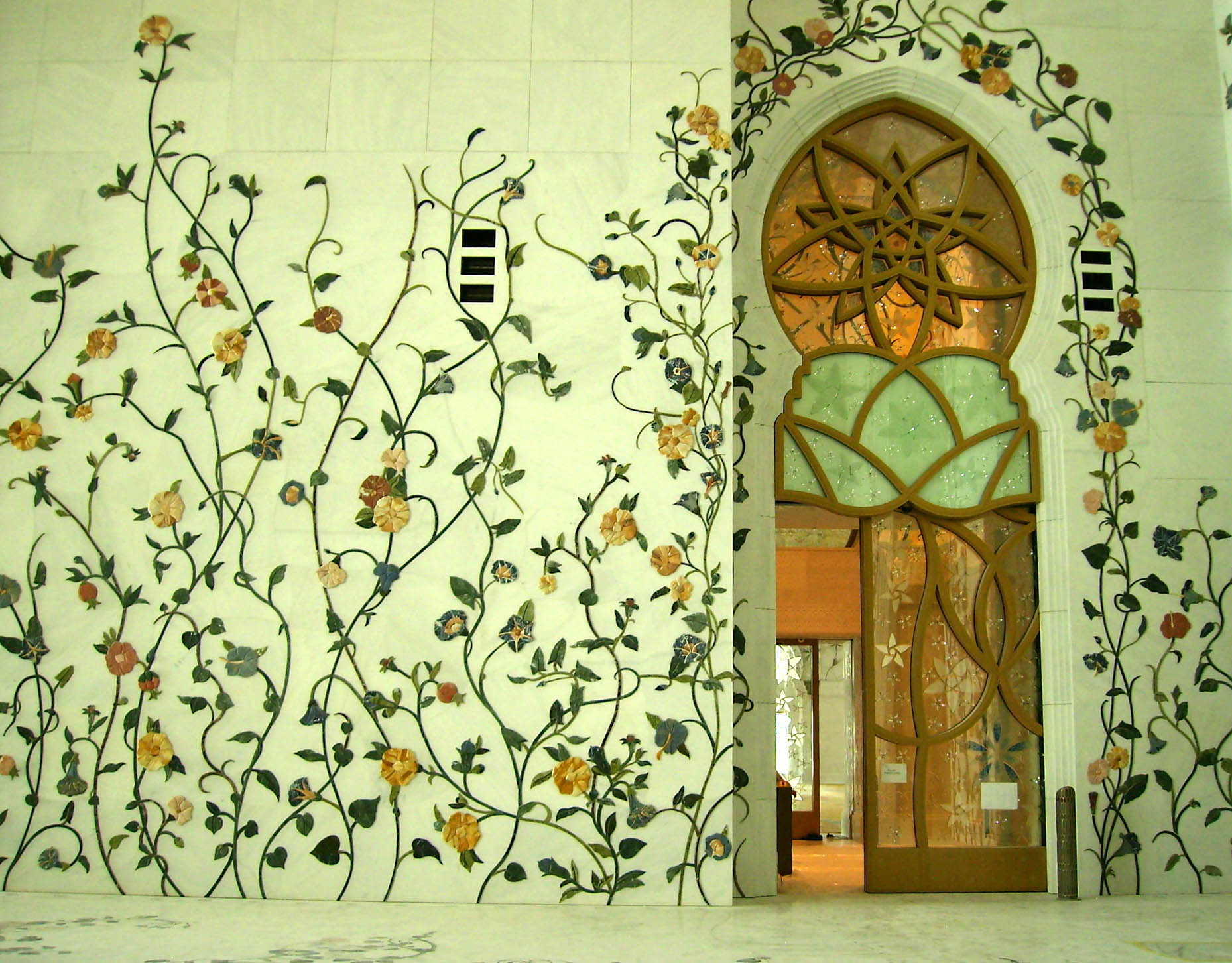
Grand Mosque, Abu Dhabi

By Shaikh Ahmad Kutty

Today, the earth is in a deplorable state: greenhouse gases in the atmosphere from our over use of fossil fuels is creating a crisis of epidemic proportions. Rising sea levels are making parts of the world at risk of disappearing into the sea, and the earth is becoming parched and dry making it more or less unsuitable for further cultivation. Isn’t it about time we asked ourselves how we are contributing to this and what we can do to reverse the process?

Fortunately, for us as Muslims, we have in the Prophet of mercy, a guide for us in even this. And so let us look to, and allow his daily examples to serve as a source of inspiration, and motivation for us in our attempt to live life green.

  1. While brushing our teeth or making wudhu, think of the Prophet (peace be  upon him), who never used more than one liter of water for his wudhu and remember that no one can perform wudhu better than he.
  2. As we take our morning shower, think of the three liters of water that the Prophet used for bathing and consider making your shower shorter (not more than five minutes).
  3. Remember that the Prophet’s mosque had only lanterns, which were themselves used sparingly, and that many of our eminent scientists and scholars used the moon light to read and write. Following in their lead, turn off the lights when not absolutely necessary and learn to relax and function without light or in dim light!
  4. Before debating purchasing a new outfit, remember that the Prophet’s wife, Aisha, wore a gown with close to sixty patches on it.
  5. Pitch in to remove litter from the streets knowing that the Prophet (peace be upon him) has said that doing so is an act of charity.
  6. Curb our never-ending  desire to consume and amass more by reflecting on the Prophetic words that, “He is not a believer who fills himself while his neighbor is starving!”
  7. Recall that many of the Prophets were trained as shepherds and that a good shepherd is one who is out in the field. So, get to know the earth and its inhabitants and act as a guardian and goodly shepherd over it.

So, let us think of the blessings of Allah and appreciate them, and know that appreciating them means to use them wisely, in moderation and never abuse them or be wasteful. And let's take responsibility for protecting the environment by following in the non-carbon, green footsteps of our beloved Prophet (peace be upon him)!

Shaikh Ahmad Kutty graduated in the traditional Islamic sciences and received the ijazah (certification) of al-Faqih fi al-Deen (jurisprudence) from Islamiya College Santapuram, a leading Islamic institution in south India. Kutty has served on the Fiqh Council of North America, the pre-eminent Islamic law body on the continent. He has served as Imam and resident scholar at various institutions in Montreal and Toronto, including Toronto's Jami Mosque and the Islamic Foundation of Toronto.

Photo credit from Jenny Mackness

Let’s become stewards of the earth

“It is he (Allah) that has appointed you (mankind) as stewards in the Earth…” (Qu’rán, 35:39)

As Earth Day 2011 quickly approaches, many of us take this opportunity to reflect and participate in annual community events aimed at reducing our environmental impact on our planet. Every year more than 6 million Canadians join over 1 billion people globally in 170 countries in staging events designed at raising awareness of the environment[i].

As Canadians we are intrinsically connected with the environment. The Canadian wilderness conjures up idealized images of pristine lakes, vast tracts of forests and endless coastlines. Although most of us live in urban areas, the multi-billion dollar outdoor and recreation industry indicates most of us seasonally enjoy the great outdoors[ii].

However our perception of nature is changing with 56% of Canadians rating the overall quality of the environment in their province as good or better. Many of us are concerned with the growing impact of climate change (85%) and our perception of the quality of the environment in general indicates it is getting worse (47%)[iii]. With growing concern over the future of our planet, the mandate of Earth Day has shifted from increasing awareness of environmental issues to outlining proactive steps individuals can take to reduce their ecological footprint[iv].

It is safe to assume that Muslim Canadian attitudes reflect similar national trends. While the community as a whole has only recently recognized the future potential of the environmental movement, the Islamic tradition is rich in progressive conservation ideals based on Islamic teachings of the Quran and Sunnah. Muslim countries have quickly adopted the green movement with new projects appearing in Jordan, the United Arab Emirates and Saudi Arabia. There are many proactive steps Muslims can take in their everyday routines that adhere to the Islamic perspective of stewardship and conservation.

Water

Do not the Unbelievers see that the heavens and the earth were joined together (as one unit of creation), before we clove them asunder? We made from water every living thing. Will they not then believe? (Qu’rán, 21:30).

Consider the water you drink. Was it you who brought it down the rain cloud or We? If We had pleased, We could make it bitter: why then do you not give thanks? (Qu’rán, 56: 68-70)

Water is the sustenance of life, however we often take it for granted not realizing its true value. As freshwater resources become scarce, the future management is becoming increasingly important.  Simple steps can culminate in saving large volumes of water over the long term.

-          Ensure the fixtures in your homes, offices, schools and mosques are water efficient and be mindful of you water use. Monitoring your water consumption not only identifies potential cost savings but adheres to the Prophet’s teaching surrounding its use.

-          Make conscious purchasing decisions that include the hidden costs of water. It may surprise you to find out the amount of water that goes into the consumer products we purchase and foods we eat. There are many online tools that help you calculate the true water costs of everyday items.

-          Become familiar with your municipality’s water conservation plan and become engaged in the long-term management of water in your community. Various levels of government routinely consult with the public on the future direction of water use and its value to society.

Waste

And He gives you of all that you ask for. But if you count the favours of Allah, never will you be able to number them. (Qu’rán, 14:34)

It is He Who has brought into being gardens the trellised and untrellised – and the palm trees, and crops, all varying in taste, and the olive and pomegranates, all resembling one another and yet so different. Eat of their fruits when they come to fruition and pay His due on the day of harvesting. And do not waste (God’s bounties): verily, He does not love the wasteful. (Qu’rán, 6:141)

Waste is something that has become endemic in our society. With the rapid evolution of technology and the spread of consumerism, we purchase, consume and discard material goods faster than any period in history. Waste has become incorporated into every aspect of our lives from excessive packing to disposable products but can be easily avoided by returning back to the basics of the 3R’s

-          Reduce: Before making a purchase, think about if you really need the item to begin with. Reducing what you consume can be the most liberating action you can take.  Many of our purchasing choices are driven by impulse derived from clever marketing campaigns. Preplanning can help with this by creating a list of items you need before you leave home and budgeting accordingly. At your mosque, consider holding litterless iftars this Ramadan and encourage your administration to adopt a green sourcing clause in its purchasing policies aimed at minimizing waste.

-          Reuse: This goes beyond reusing glass jars and old boxes. Think about alternate uses for an old item or someone else who would make better use of it. Books can be passed on to local libraries, toys can be donated to community centers and children clothes can be exchanged with friends and family. At home consider installing a greywater system that uses rainwater for non-potable uses such as flushing toilets or in the garden. Also, think about purchasing reusable products as opposed to disposable. Not only will it be more economical, but will also reduce your own ecological footprint.

-          Recycle: Most urban municipalities today have some form of recycling program in place. Several provinces have environmental fees for the safe disposal of electronics, tires, chemicals and other waste solvents that recover the valuable components of used products and safely dispose of the residual waste. While this only deals with the end product, the only way to truly eliminate waste is to avoid unnecessary purchases to begin with. Consider purchasing items that are designed for the environment; which are dismantable and can be easily recycled into other products. 

Nature

“There is none amongst the Muslims who plants a tree or sows seeds, and then a bird, or a person or an animal eats from it, but is regarded as a charitable gift for him.” (Bukhari, Vol3, B:39-513).

Corruption has appeared on the land and in the sea because of what the hands of humans have wrought. This in order that we give them a taste of the consequences of their misdeeds that perhaps they will turn to the path of right guidance (Qu’rán, 30:41).

As stewards of the natural world, we have a responsibility to ensure that the principles of Islam are enshrined in the management of the environment. This starts with taking a proactive role in local communities as well as being included in the national discourse surrounding the future direction of environmental policy. Several measures can be taken to bring the environment to the forefront of these discussions.

- Become involved with your local conservation authority or national/provincial park. Many run outreach events for both children and adults that include aspects of conservation, education and monitoring of both wildlife and plant species.

- Consider organizing your own clean-up, tree planting event or community garden at your local mosque. Events like this bring together communities around a common goal and enhance the natural surroundings for worship.

- Perform outreach with other faith organizations that have similar environmental goals.  Decision makers are more inclined to listen to a unified voice that represents all faith communities and possible barriers can be broken down through interfaith dialogue.

While Earth Day may be one day out of the year for many Canadians, the stewardship responsibility of the planet should be a daily consideration of all Muslims.  Simple steps in your daily routine can minimize your individual ecological impact and create a more livable environment consistent with Islamic teachings of the Quran and Sunnah.


[i] Earth Day Canada (2011) Celebrated every April 22, Earth Day is the largest, most celebrated environmental event worldwide. Last Accessed April 20 2011 at:  http://www.earthday.ca/pub/about/history.php

[ii] Statistics Canada (2009) Summary statistics for the amusement and recreation industry, Canada, 2009. Last Accessed April 20 2011 at: http://www.statcan.gc.ca/pub/63-248-x/2011001/t001-eng.htm

[iii] Martyn, Chris. (2007) Getting Real – How Do Canadians View the Environment and Energy? Ipsos Reid. Last Accessed April 20 2011 at: https://www.ipsos-na.com/knowledge-ideas/public-affairs/ipsos-ideas/Default.aspx?q=getting-real-how-do-canadians-view-the-environment-and-energy-

[iv] Statistics Canada (2009) Households and the Environment. Last Accessed April 20 2011 at: http://www.statcan.gc.ca/pub/11-526-x/11-526-x2007001-eng.pdf

Photo Credit from Hamed Saber: http://www.flickr.com/photos/hamed/